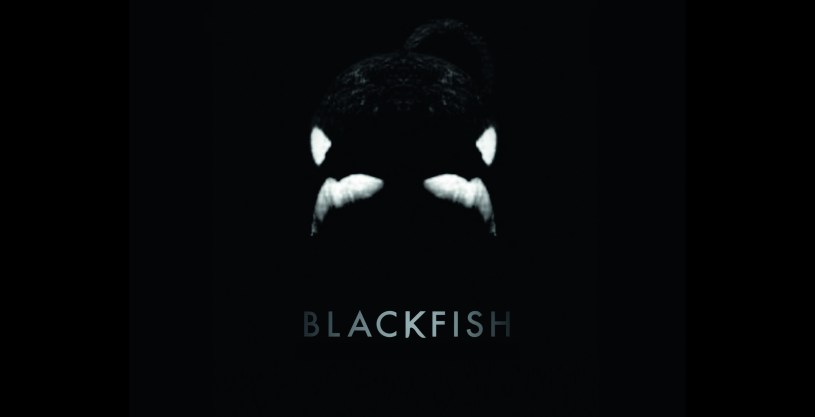

Sitting in shock, viewers watched as this tremendous yet magnificent creature bellows and fades into what can only be perceived as depression, as its baby is torn from its side and sent to a facility halfway across the world. The producer, Gabriela ensures to viewers, she is instilling the sympathy for the Orca pods that are held in captivity. The common name for Orca is killer whale, though Gabriela refrained from using this term throughout the movie. Gabriela didn’t use this term because of the belief it would take away from the argument she is trying to make through her film blackfish. Peoples’ hearts break as marine biologists explain that these calls resemble those of signaling and searching for their young, a language unique and specific to each Orca pod. Blackfish struck a painful cord with many people, igniting the urge to fight against Orca and all marine mammal captivity for entertainment and tourist purposes. The 2013 film, Blackfish is a movie about an Orca named Tilikum. Tilikum had been held in captivity for many years, causing a huge controversy across the globe after his killings of multiple talented trainers. The movie was inspired by an article the director read and felt compelled to produce a movie about. This article explained the inhumane conditions that Tilikum had endured for many of years while held in captivity, and helps promote against future Orcas that may faced the same future. The creators of this film use the graphic imagery of multiple killings, detailed testimonies of numerous trainers, and the in depth life of confinement of Orcas to prove to viewers that the life they live is cruel and inhumane.
This documentary goes through the life of Tilikum, the main 32- year- old Orca that had lived in isolation for 20 plus years since the age of 2. This poor male Orca was taken from the Northern part of the Atlantic Ocean, where they then held him in his first “home”, Sealand of the Pacific. Producer Gabriela took us through the journey of the life where Tilikum’s problems stemmed from. Through the numerous amounts of research, she did, she found that this male Orca was continuously taunted by the other female Orcas that were held in the same pool together. Though many had expressed that he previously showed his first signs of aggression towards humans when trainer, Keltie Bryne fell into his pool. The director, Gabriela, is trying to wrap her viewers to realize that prior to captivity, Orcas were not known for aggression. She wants viewers to be able to emotionally connect to the Orcas who are suffering through in captivity.
The producer Gabriela focuses her documentary on the life these amazing animals have while kept in captivity is nothing close to the life they would have in the ocean. Instead they live in their own personal size bathtub where they continuously swim in circles amusing large crowds of people, but essentially losing their minds. The main purpose Gabriela tries to get across to her viewers is that no animal this large should be in captivity. She gathers clear evidence to prove that the changing behaviors that occur in these Orcas are stemmed from being held in captivity. The Orcas have been researched for years by many scientist determining how their aggression arises. Orca researcher Howard Garrett stated in the blackfish film, “There is no record of an orca doing any harm to a human while in the wild (blackfish film).” Many different researchers like Howard have spent lengthy hours conducting vital research to prove that Orcas are only dangerous when kept in a confined space, captivity. Throughout this Documentary, Gabriela continuously makes sure to include vital information to ensure she has concrete information to back her claim against Sea World.
When Tilikum was transferred from his original facility he was then sent to SeaWorld in Orlando, FL where he then attacked his second person, Daniel Dukes, who was thought to have been in the area unauthorized. Shortly after these signs of aggression, he then proceeded to his third attack on trainer, Dawn Brancheau during a performance. Though these attacks were very gruesome, Gabriela felt it was vital information to include because of the specific claims she makes throughout the documentary. Gabriela and other researchers believe being held in captivity makes the Orcas show aggression. An article quoting the gruesome scene about the attack on Daniel Dunes, is what originally grabbed the director’s attention. “He glanced through the glass and saw Tilikum staring back, with what appeared to be two human feet hanging down his side. There was a nude body draped across Tilikum’s back” (Zimmerman, Tim). Researchers, included with Gabriela’s initial opinion have come to the conclusion that these awful attacks have been caused by the emotional stress captivity gives to the Orcas. Former trainer John Harvegrow says, “Now he advocates on behalf of the whales, explaining that – in his opinion, irreversible physical and psychological harm on the whales” (Natureworldnews). Throughout the film, viewers find that Producer Gabriela continuously has concrete information that backs all of her claims made against Sea World and the Orca’s in captivity. Through the film, Gabriela continuously uses other credible sources, through researchers who are advocates for the Orcas. She wants to clarify that yes, though the attacks were gruesome the whales were not primarily to blame.
Throughout this documentary, not only does the Producer ensure the movie focuses about the deaths that the whales have caused while being in captivity, but they also talk about the health and behavioral changes they experience. In several interviews throughout the movie, many state that the life span of these Orcas are cut by significant amounts due to the living environments and the behavioral changes they experience. In an interview, John Jett who is a former trainer of Tilikum states, “I’d been expecting somebody to be killed by Tilikum, I’m surprised it took as long as it did” (Blackfish film). Jett explains that this wasn’t a shock to him because he continuously showed signs of aggressive behavior not just towards the trainers, but other whales as well. Producer Gabriela personally read several articles and did lengthy research before conducting the movie, to ensure she had concrete information to provide an informational documentary for her viewers. Through the research she conducted, Gabriela found proof through many different researchers that the aggression towards the trainers and other whales is abnormal to the behavior they have in the wild. Gabriela continuously ties into this, to help us, the viewers understand that if more whales go into captivity they will continue to show more aggression.
The producer and also director of this movie, Gabriela put in countless hours to make sure she was able to not only make a film, but an informative and credible documentary about the struggles and damages being committed against these beautiful creatures. The director made sure to leave viewers with a complete picture of the inhumane treatment the Orcas have to endure while being held in captivity. Not only does Gabriela give numerous testimonies from various trainers who work first hand with the Orcas, but she instills us with factual writings to prove her claims. Gabriela wanted to appeal emotionally to viewers by thoroughly describing the characteristics the Orcas portray not only in captivity, but in the wild as well. Gabriela used many credible sources for the Orcas by including interviews and factual information from various researchers to essentially connect with viewers as to why Orcas should no longer be held captive. Gabriela wanted to embed a message to viewers, to become advocates for the whales, and to protest Orcas being used for entertainment and being put into confined spaces.
Sources:
Blackfish. Dir. Gabriela Cowperthwaite. CNN Films and Manny O. Productions, 2013. DVD.
Zimmerman, Tim. “The Killer in the Pool.” The Killer in the Pool 30 July 2010: n. pag. Web./.latest_citation_text
@natureworldnews. “SeaWorld Ex-employee John Hargrove…” [EXCLUSIVE INTERVIEW].” Nature World News RSS. N.p., 01 Apr. 2015.


On the 4th paragraph, try to end it with tying in the kind of emotion the attacks may make the viewers feel and say how the producer makes it so that they do not feel bad that the whales attacked the humans because of the given research as to why the orcas attack and how it can be prevented.
In the 5th paragraph try to point out what it is appealing too more instead of more of just the summarizing.
Overall just try to point out what the movie is suppose to portray to the viewers instead of just saying what it is about. Tie in what the producer wants the viewers to think after seeing the movie.
LikeLike
The style of writing I use throughout my essay, I believe would be consider as a middle style. I believe this because I have informal style of writing, but also shows that I did plenty of research to provide a credible analysis.
LikeLike
Reflecting back onto my essay I had a few weaknesses with this one. I had a problem with tying my essay into the rhetorical part and not just analyzing the movie. I had to go back multiple times, between looking through the book and online formats to ensure I was setting it up correctly. I believe that my thesis was the strongest and easiest part for me to come up with for this essay! Though I struggled a lot with this particular essay the more I referred to other sources the easier it became. I think on this essay I deserve a b because though I had a strong thesis I think my body paragraphs could use some work. My conclusion I believe also was very strong because I made sure to tie everything together.
LikeLike