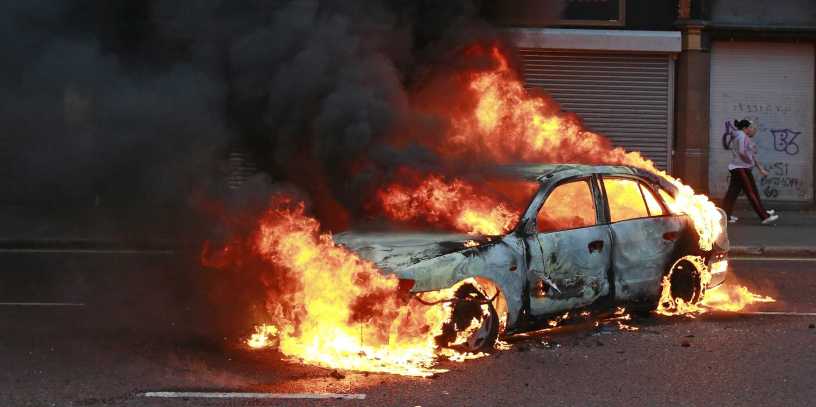
Have you ever been in a car crash? Or known someone who was in an accident? Can you remember the rush of emotions you felt as you realized you or a love one’s life almost came to an end? I’ll never forget my mom’s tone when she called me saying my little sister had been in a car accident and got a DUI. My little sister had been at the legal limit but she was under twenty-one. She was exhausted from driving and veered a bit leading to a collision with the center divider. She was unconscious and woke up in the hospital alone, It took a while to relay the information to the whole family. We were all caught off guard when we heard the news, it was out of character for my sister Karina. She’s a straight A student and probably one of the most well rounded teenagers I know, but the fact of the matter is, she’s still just a teenager. Can you remember being a teenager? Remember what it felt like to be so ignorant that you thought you were impervious to danger? Luckily my sister is okay today but like many teens who get involved in accidents she had to go through a lot to discover the dangers of driving. She now has to go to DUI classes and is paying the full adult punishment for a mistake made by a child. Most teenagers make the biggest mistakes at these right of passage ages like eighteen and twenty-one. We have been restricted from so much and the rush of freedom leads to mistakes. Shouldn’t there be an easier way? Shouldn’t teens be eased into responsibility rather than given it. When it comes to reducing teen car accidents there is an answer, the answer is to raise the age of driving to eighteen at the very minimum. Eighteen is still very low and its possible to make mistakes at this age but at least its consistent with the age of adulthood.
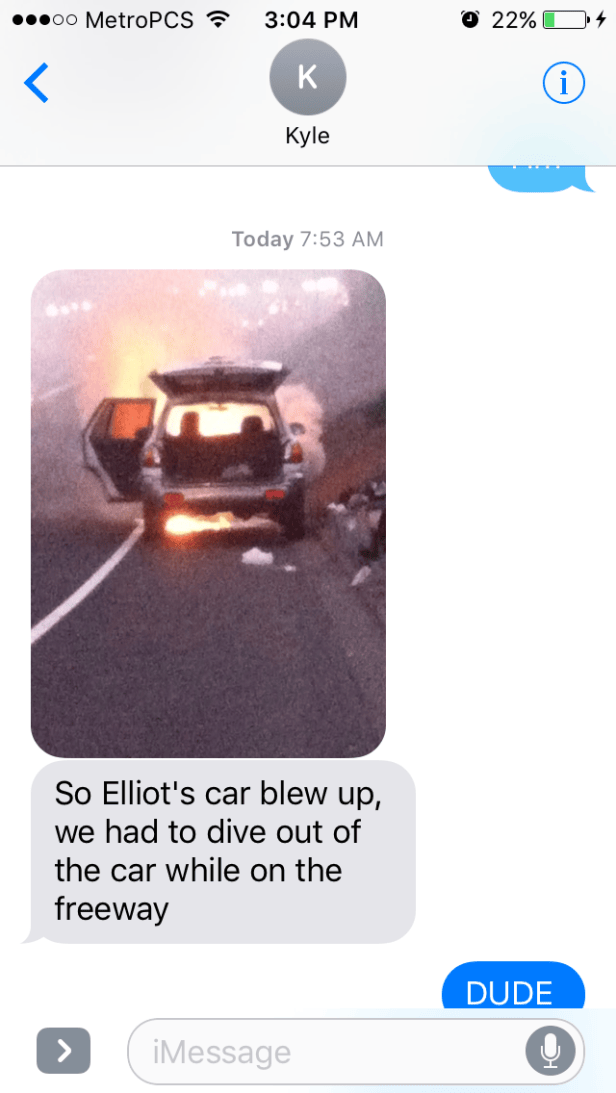
As I was writing this post my best friend texted me saying the car he was in blew up on the freeway. He saved his life by jumping out of the car as it flew down the freeway in flames. My friends Kyle and Elliot had been heading to work early not realizing the smell of a gas leak. People were honking at them signaling to the fire on the hood of the car. When they noticed the fire on the hood there was an explosion. Elliot pulled the emergency brake and they jumped out of the vehicle. They quickly removed their things as the car was igniting with fire. I couldn’t help but think that could have been me because I was in that car no longer than a month ago. Even at the age of twenty four you can make bad judgment calls and not know how to properly take care of your car. Instead of my friend imagine that was your sixteen year old daughter/son or younger brother or sister. Its no surprise Murphy’s law doesn’t hold back when it comes to car accidents. It doesn’t mean we should ban cars or driving but its a responsibility adults should bear and not children. We shouldn’t allow young teens to drive for the same reason we don’t put a M16 in our child’s hands and send them to war. According to The Centers for Disease control and Prevention 32,000 deaths and 2 million nonfatal injuries occur on U.S. roads each year. In 2014, 2,270 teens in the United States ages 16–19 were killed and 221,313 were treated in emergency departments for injuries suffered in motor vehicle crashes. That means that six teens ages 16–19 died every day from motor vehicle injuries.
Oakdale teen Amanda Clark’s car rolled three times after being hit by another driver. The car tumbled till it rested upside down on the road. She ran a stop sign and admits she wasn’t paying attention while on the phone with friends while driving. She was lucky to survive with just scrapes and bruises. Amanda had a very optimistic view on this experience, she told herself everything happens for a reason and this car accident was to show her the dangers of her driving. She realized she needed to change her driving habits and learn to slow down and pay more attention to the road along with abiding by the hands free law. After this event she vowed to put her phone away each time she drove. A year later she had lost control of her car and crashed. the records revealed she had been texting during the time of the accident. It took forty minutes to remove her from the car, when they got her out she had not been breathing for twenty minutes. She died the next day. “I thought this would be a wake up call for her,” said Clark’s mother Bonnye Spray. “And it was for a short time she wouldn’t talk on the phone, she was more cautious. But she got more confident in her driving and a sense of ‘Hey, I survived one, I’m invincible, nothing is going to happen to me now.’” Seems to me that even after Amanda’s epiphany she still wasn’t ready to be back on the road. Every teen related car accident shows a trend of over confidence and poor judgment due to young age.
What is the appropriate age for driving? At the very least it should be eighteen, the age of adulthood. In America we have such an unclear view on adulthood. All of our adult laws are scattered with age requirements. We should clear up some of the ambiguity by making the driving age the age of adulthood. Making the driving age eighteen gives at least two years to learn more about safe driving. This cant all be the up to the law though, we should personally teach good driving habits to the younger generation. The biggest point is making sure consequences of driving mistakes don’t ruin the rest of someone’s life. We need to minimize the consequences of driving accidents and heighten the knowledge and wisdom of young drivers.


Introduction: Very strong. Clear argument.
Clearly defined claims: Clear claims
Claims supported: Well supported with examples and evidence.
Organization: Good organization. Transitions could have helped to make it flow more. Your paragraphs are great.
Properly cited sources: No works cited or in-text citations. You did introduce the sources
Errors and typos: None visible.
Comment: Really powerful argument. You used the stories very convincingly.
LikeLike