So, you’re finally eighteen. You’re a legal adult! You can vote, join the army, marry, or even die for your country. But wait! STOP! Put down that beer! You are still not old enough to buy or consume alcoholic beverages. No, you must wait three more years for that, until your twenty-one. Should the drinking age be lowered? Well I for one believe that the legal drinking age should be lowered from twenty-one to eighteen.
Even professors are involved in trying to get the age lowered. Dr. Ruth Engs, Professor of Applied Health Sciences at Indiana University states, “Currently, we prohibit 20-year-olds from sipping champagne at their own weddings (Ruth C. Engs 1)!” A wedding is a time of celebration of course there is going to be alcohol involved. Shouldn’t a bride and groom who were considered old and mature enough to get married consume an alcoholic beverage? If 18-20-year olds are matured enough to know who they want to spend their life’s with, they should be able to have a beer or two.
At the age of eighteen we enter the age of freedom and are considered as adults. If one is considered responsible enough to fight for our country, then how is one not responsible enough to be able to decide whether we want to consume alcoholic beverages? Jeff Rainforth, a man that ran for U.S. Congress in 2010, stated that if the minimum legal drinking age was not changed, he was going to propose that those turning eighteen joining the armed forces could still join, but they would not be allowed to fight in combat until reaching twenty-one. He is referring to being eighteen, an adult, we can’t do adult things? Doesn’t make sense. He claims that it is easier sometimes for a person to obtain drugs than it is for them to purchase a single can of beer. There are far worse things to consume than alcohol, like drugs. Rainforth also mentioned that “either a person can make rational life decisions at age 18 or a person can make rational life decisions at age 21. It cannot be both ways. Jeff is stating that whether eighteen or twenty-one, doesn’t matter, you can make life decisions. At eighteen your brain is fully developed; you know right from wrong.
In America, a citizen is claimed to have all of these rights. An American citizen is supposed to be able to make their own decisions. If this is the case, then why can’t an American citizen choose to drink alcohol after they have reached adulthood? Citizens in other countries are able to make their own alcohol consumption decisions by the time they are thirteen! For example, Europe. In the article, Is It Time to Lower the Drinking Age, Will Fulton, explains when he traveled to Europe and experienced Europeans drinking, “I remember being fascinated by the level of respect and control young Europeans had when they drank. Their explanation was they had been exposed to alcohol almost their entire lives, as enjoying a glass of wine at dinner is not uncommon for children as young as 12” (Fulton). They knew how much alcohol they could handle because they were taught about it in a transparent way rather than hiding it. This way of life seems to be working for some countries. By returning the legal drinking age to eighteen and teaching young adults how to drink responsibly, perhaps everyone would no longer see alcohol as a deviant action, but as a substance that is meant to be enjoyed by mature young adults.
Even though the legal drinking age is twenty-one, a majority of the people under this age consume alcohol. A great deal of these law-breakers consume alcohol irresponsibly because they see it as rebelling. Since the age was raised, many young adults have drunk more abusively than in the past. Raising the drinking age brought about more problems than it solved. For example, “cutting class after drinking” jumped from 9% to almost 12%; “missing class because of hangover” went from 26% to 28%; “getting lower grade because of drinking” rose from 5% to 7%.” (Ruth C. Engs). This increase in abusive drinking behavior is due to “underground drinking”, teenagers will drink in the mountains, school housing, etc.
Drinking and driving is the biggest concern to this topic. Studies show that there was a thirteen- percent decline in the number of single-vehicle nighttime crashes among eighteen through twenty-year-old’s after the drinking age was raised to twenty-one. I believe that there will always be people that will drink and drive, and there is nothing anyone can do to completely stop it. The answer is not to raise the drinking age, but rather to educate more thoroughly the dangers of drinking alcohol to the youth. Learning how to drink in a safe and moderate manner is more important than worrying about the age of the individual. People of all ages get into car accidents.
If changing the age to eighteen isn’t suitable, there are other solutions. Either way, young adults are going to find their own ways to get alcohol. Maybe we could consider to those under age t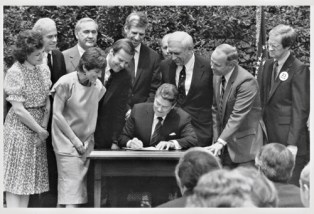 o consume alcohol in only restaurants. Business levels might even increase after introducing this idea. America should consider repealing the National Minimum Drinking Age Act of 1984. The National Minimum Drinking Age Act of 1984 was passed on July 17, 1984. It punished every state that allowed persons below 21 years to purchase and publicly possess alcoholic beverages by reducing its annual federal highway apportionment by ten percent.
References:
http://www.indiana.edu/~engs/articles/cqoped.html
Academic:
http://www.huffingtonpost.com/thrillist/is-it-time-to-lower-the-d_b_9633254.html


Introduction: Strong intro, does not include claims.
Clearly defined claims: Clear claims
Claims supported: Good use of sources to support claims. No counterargument included.
Organization: Could use a little more info in the intro to set up the whole argument. The Conclusion leaves the argument unclear. It weakens the good points you make.
Properly cited sources: In text citations. The works cited needs work for it to be MLA.
Errors and typos: Nothing big.
Comment: Feels incomplete, like you did not wrap up your argument.
LikeLike