Love is a unique force of nature, it has the power to alter one’s mindset in miraculous ways. Love can be just as destructive as it is good. Love itself is viewed differently by many people. Everyone has a different understanding on the concept based on how they were brought up in their lives. All their experiences whether joyful or traumatic impacts one’s capability to feel and express love. In Eleanor & Park, Rainbow Rowell shows just how risky and dangerous love can be, how it can ignite as quickly as a flame, and how those under the spell act and react. Both Eleanor and Park are two extremely unique characters, and their lives are practically opposites; how they live, how they were raised, etc. Throughout the novel, as their love story unravels and progresses, it almost seems as if the true feelings shared between the two star crossed lovers are not mutual. The fact that Eleanor never said the three words, “I love you,” to Park whereas he has mentioned it at least five times over the span of their relationship leads one to assume that Eleanor never actually loved him. However, this should not be the case as it is shown throughout the novel that her feelings toward him are genuine. Eleanor and Park’s diverse backgrounds have a significant impact on how they perceive love and how they can express it.
Eleanor is a troubled girl who comes from a broken home with little to work with. She has witnessed her mother and father separate at an early age, and she must deal with her horrible stepfather, Ritchie, as he attempts to make her life a living hell. In the beginning of the novel, Eleanor has just returned to her messed up home with her mother, siblings, and Ritchie; he had kicked Eleanor out of the house and she had been away for a year. Eleanor’s perception of love is quite shaken. Her mother’s failed attempts at finding true love only proves to Eleanor how love could never work. This is why Eleanor always acts standoffish and somewhat evasive whenever she is with Park. She is too afraid to open up and give in to her emotions as she is afraid of being betrayed and heartbroken. Her life is already a mess as it is, so she would not want to give some guy the power to break her as she’s seen the way Ritchie treats her mother.
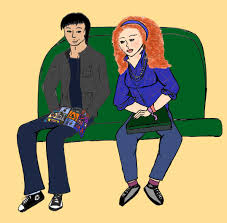
Park on the other hand comes from a simple and loving family. His parents love each other dearly: “His dad barreled into the kitchen and scooped his mom into his arms. They did this every night, too. Full-on make-out sessions, no matter who was around” (Rowell 25). His parents exhibited a near perfect love story. His father had met his mother when he was in Vietnam fighting the war, they fell madly in love, and he decided to take her home with him. Park also sees the great possibilities of love with his grandparents. His life is problem free and does not see as much hardship as Eleanor’s does. This is why Park is more open to the idea of love and is more than willing to openly give himself to Eleanor as compared to Eleanor.
When Eleanor and Park are in their English class during one of the first days of school, their teacher Mr. Stressman discusses and analyzes the story of Romeo and Juliet with the whole class. This is a highly important scene as it depicts how the two teenagers view love from their own perspectives. When Stressman asks Eleanor for her opinion on the story she begins to debunk it and criticize it, “Romeo and Juliet are just two rich kids who’ve always gotten every little thing they want. And now, they think they want each other… It’s Shakespeare making fun of love” (Rowell 44). Eleanor doesn’t see the love in the story. She looks at it with a cold, cynical mind. Her responses are simply her inner reflection on love and how it cannot be real.
Perhaps Eleanor wants to believe in love, but the way she’s been “exposed” to it makes her afraid to believe in it as she does not want to get hurt. On the flipside, Park’s response to the story is the complete opposite.
After hearing what Eleanor had to say about Romeo and Juliet, Stressman asks Park what he thinks about it. “Because people want to remember what it’s like to be young? And in love?” (Rowell 45). Park chooses to look at the story with a more emotional perspective compared to Eleanor. He thinks that love is real, and everyone wants to search for it and experience it. Rowell’s use of Romeo and Juliet foreshadows how Eleanor and Park’s relationship will play out. It will be a constant battle between their opposing mindsets on love and how it works.
Eleanor first phone call with Park is the first time they can actually talk to each other and express their feelings and ideas with one another. This is where both have to ponder with their inner feelings and emotions which proves to be quite difficult. When Eleanor asks Park why he likes her, he goes on to talk about all the qualities he loves about her. It is easy for him to express himself and he almost gets carried away with it: “I don’t like you… I need you” (Rowell 109). Conversely, when he asks Eleanor why she likes him she avoids the question at first and jokes around by saying she doesn’t like him. It takes some time for to open up, and she makes it know that it’s difficult. She tells Park how she’s afraid of saying too much or how she’ll tell him the truth (Rowell 111). Once she gathers the courage to tell him how she feels, Eleanor says, “I… think I live for you” (Rowell 111). Through great effort Eleanor gives in to Park and starts to express her love for him. Park continues to teach Eleanor how to open upon and let him in as their relationship progresses.
The argument between Eleanor and Park over Tina being Park’s first kiss gives us more insight on how they perceive love and their ongoing relationship. When Eleanor learns that Park’s first kiss was Tina, she is deeply affected by it and questions his reasons. Park goes on to explain that nothing before Eleanor matters as she is what’s important to him; he mentions to her how he cannot imagine an “after” (anything beyond their relationship). She tells him to stop speaking of an after, and Park continues to state that there possibly won’t be an after. Eleanor disputes this idea when she replies, “I mean… God, of course there will. It’s not like we’re going to get married, Park” (Rowell 237). She does not want to think that far ahead of their relationship no matter how hard she was falling for him. Eleanor even makes a comment, “Romeo, sweet Romeo…” (Rowell 237). Park does not hesitate to confess his love for Eleanor, and based from their conversation it shows how easy it is for him to accept love, so much that he’s willing to see far ahead into their relationship. On the contrary, Eleanor is trying to disprove the idea of them lasting for so long. No matter how much she may be feeling for Park, deep down in Eleanor’s subconscious all she can see or think about love is the ultimate failure of it.
Eleanor’s life has been full of disappointment and being let down. It is so difficult for her to let people love her because in the end it just does not work out. Her whole life so far has been a battle between her and the world. Park was the one to show her that there possibly is a chance at finding love. He has helped her to express herself with others and to feel comfortable and safe. However, it simply was not enough. Truly, their love for each other was real, and the only factor that led to their speedy downfall was a matter of timing. Eleanor was not in the right place or mind to openly love another person because just as things were beginning to work in her favor something would always bring her down (in this case it was her abusive stepfather). All in all, Eleanor and Park’s views on love may have been changed a bit from their experience with one another. They both learned a great deal from each other. It was as if they were stepping stones to a greater understanding and a more positive future.
Were the last three words that Eleanor wrote to Park “I love you?” Perhaps not because it would go against the whole dynamic between Eleanor and Park. Eleanor never wanted to say it because she knew deep down that it would not work between them. She was saving the trouble and heartbreak.

