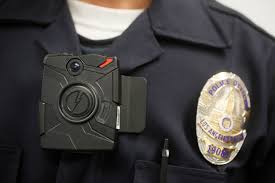
Adam Rabolt and Darren McMullin were both 25-year-old laborers from Shelburne, Ontario and had been best friends since the third grade. On the night of June 15, 2007, Rabolt, who had had a few beers that day while playing in a local golf tournament, was woken up from a nap by McMullin, who had also been drinking and persuaded his friend to go out on the town. The two friends climbed into Rabolt’s  Ford Focus and headed for a strip club about an hour and a half away in Vaughan, just north of Toronto. By the end of the night both Rabolt and McMullin had been very intoxicated, however Rabolt still made the choice to drive himself and his best friend home. Little did they know, they wouldn’t both make it back. Some hours later, while driving home on the Highway, Rabolt’s Ford left the road, travelled across a grassy shoulder and slammed into a grove of trees. Rabolt walked away while McMullin, who was not wearing a seat belt, died at the scene (Kohler and Friscolanti).
Imagine being the one responsible for taking your own best friend’s life. Imagine taking any life. Stealing the life of an innocent person who has a family waiting for them at home and a whole future ahead of them. How would this make you feel? Driving under the influence of alcohol has become a major issue in the United States and has contributed to many fatal car accidents that often times lead to the deaths of innocent people. Everyday, 28 people in the United States die in motor vehicle crashes that involve an alcohol-impaired driver. This is one death every 51 minutes (cdc.gov). In 2015 alone, 10,265 people died in alcohol-impaired driving crashes, accounting for nearly one-third (29%) of all traffic-related deaths in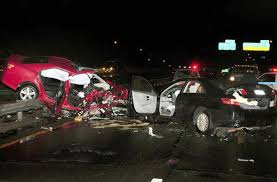 the United States (cdc.gov). Many suggestions have been raised in order to have an adequate solution for the issue of drunk driving, however very few are actually placed into action. Although some may find it pointless to fund new programs to cure a problem that will always exist, taking actions towards eliminating the problem of drunk driving and saving as many lives as possible would be the most beneficial step for this country. What if it was your loved one who was killed on the road by a drunk driver?
The main issue here isn’t necessarily the drinking, it’s the driving. While many people believe that they are only “buzzed” and one hundred percent able to drive themselves home safely, they are way above the accepted blood alcohol concentration level of 0.08 g/dL and cannot ensure the safety of themselves as well as other drivers on the road. It’s not that drunk drivers are on a mission to kill people, however they often times feel like they have no other option but to drive home. When leaving a bar or a party they don’t want to wait and pay for an Uber and they for sure don’t want to call their parents to pick them up.
Taking this into account, an effective solution needs to be developed immediately. This problem can’t continue to be swept under the rug. Police officers and random checkpoints throughout each city clearly  isn’t enough. As a matter of fact, a recent study found that 62% of drivers leaving a U.S. checkpoint with blood alcohol concentrations (BACs) above 0.08 g/dL passed through undetected (Elder, Shults and Sleet). This means that over half of the intoxicated drivers passing through checkpoints are not getting caught and are passing through without being arrested. This statistic by itself should be powerful enough to understand that further actions need to be taken to create a safe environment for drivers on the road. Instead of falling back on punishment right away, maybe help should be offered first. Again, it’s not that drunk drivers are out to take the lives of innocent people, there just aren’t enough resources available for people that find themselves in this situation.
There are two possible solutions that could decrease the amount of drunk drivers on the road, thus leading to less accidents and deaths overall. The first solution would require bartenders, by law, to collect the keys of every person drinking at the bar and requiring them to show proof of a safe way to get home before getting their keys back. It is already required by law that bartenders are prohibited from serving to habitual drunkards and obviously intoxicated persons (abc.ca.gov), however many times bartenders are the ones encouraging more drinking for people who are already visibly intoxicated. If bartenders were held partially responsible for who they let out on the road, the number of drivers under the influence of alcohol on the road would decrease. It is even possible for the driving company Uber to 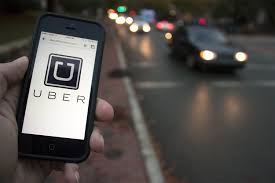 partner up with local bars and wait in the parking lot ready to give rides to drunk people. Many people initially plan on getting home safely, but this all changes when they are drunk and feel that they have no option but to drive themselves home. They don’t think twice about the danger they are putting themselves as well as other drivers in. If Ubers were already present outside of bars waiting to drive intoxicated people home, more people would be inclined to take the safe ride home and pick up their cars from the bar the next day.
Another possible solution towards preventing driving under the influence would be breathalyzer-to-start cars. Currently, some drivers who have previously been convicted of a DUI (driving under the influence) 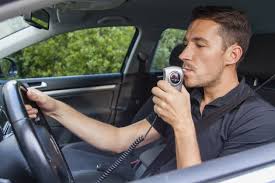 have had an ignition interlock device installed into their vehicles, but not all vehicles are required to have this device. An ignition interlock device (IID) is similar to a breathalyzer, however, an IID is connected to the vehicle dashboard or other location inside the vehicle and requires that a driver breathe into the device prior to starting the vehicle (Coben). If the ignition interlock device detects the blood alcohol concentration of the driver to be above the programmed limit in the ignition interlock device, then the engine of the vehicle will not start. If all drivers were required to have an ignition interlock device installed into their vehicles, no driver with unacceptable blood alcohol concentration levels would be on the road, guaranteeing a significantly safer driving environment.

Although there will never be a way to keep one hundred percent of drunk drivers off of the road, there are actions that can be taken in order to prevent as many of them from being on the road as possible. It is time more light is brought to the issue of driving under the influence of alcohol so that the issue can be tackled head on. There is no way to eliminate a problem if it is never addressed. Keeping drunk drivers off of the road means that not only you are in less danger, but your parents, grandparents, brothers, sisters, and children are in less danger as well. Don’t wait until you lose one of your loved ones before you take this issue more seriously. Stop drinking and driving!
Works Cited
California, State of. “Licensee Education on Alcohol and Drugs (LEAD) Program.” Welcome to the State of California, Department of Alcoholic Beverage Control, www.abc.ca.gov/index.html.
Coben, J. H., & Larkin, G. L. (1999). Effectiveness of ignition interlock devices in reducing drunk driving recidivism. American Journal of Preventive Medicine, 16(1), 81-87. doi:10.1016/s0749-3797(98)00117-2
Elder, R. W., Shults, R. A., Sleet, D. A., Nichols, J. L., Zaza, S., & Thompson, R. S. (2002). Effectiveness of Sobriety Checkpoints for Reducing Alcohol-Involved Crashes. Traffic Injury Prevention, 3(4), 266-274. doi:10.1080/15389580214623
Kohler, Nicholas, and Michael Friscolanti. Alife Lost and a Life Destroyed. web.b.ebscohost.com.chaffey.idm.oclc.org/ehost/detail/detail?vid=5&sid=d2d0240c-55be-4963-8597-
“Motor Vehicle Safety.” Centers for Disease Control and Prevention, Centers for Disease Control and Prevention, 16 June 2017, http://www.cdc.gov/motorvehiclesafety/impaired_driving/impaired-drv_factsheet.html.
Images:

