
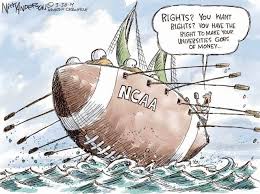
Is providing a service but being refused the right to be paid for it robbery? Volunteering for a cause is one thing, but once an athlete reaches the college level, sports are no longer simply hobbies, but possible careers. College athletics have been around for over a century, considering the fact that the first organized college sports club was the boat club formed by Yale in 1843. Due to the growth of the these sports, there needed to be an organization to provide rules and regulations for the athletes and colleges to abide by which led to the formation of the NCAA. One of the most controversial rules formed by the NCAA is that athletes are forbidden from receiving any form of payment or compensation for their work or they will no longer be considered amateurs. These athletes are expected to perform at an extremely high level and prepare for these athletic events day in and day out. They provide entertainment to millions and earn hundreds of millions of dollars for the NCAA but receive nothing in return. The solution is quite simple, compensate them for their work. College athletes provide more than enough money to the NCAA for them to be fairly compensated. The lack of scholarships in general and the scraps of money generally given should convince you that any normal person would need more than it to live adequately. Providing a payment system to these athletes would allow them to support themselves and their families back home, so they would be able to remain in college for longer periods of time. The NCAA has refused to pay its athletes for years, but it is never too late to fix that which is wrong.
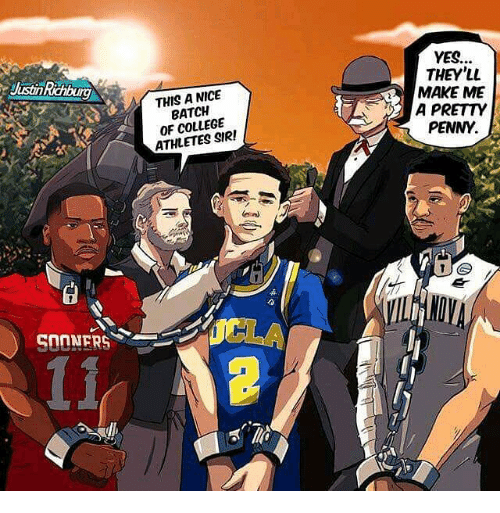
Steve Berkowitz of USA Today Sports claims the NCAA made around $1.1 billion in the 2017 fiscal year. The NCAA has changed from an organization to provide order to the sport to a business which runs on the exploitation of their athletes. Considering the fact that this organization would not make any of this profit without the athletes is evidence in itself. Duke University has recently recruited a player by the name of Zion Williamson, a basketball phenom who is in the top of his class and projected to be drafted number one overall in the NBA draft. Duke and the University of North Carolina recently had a basketball game this past week in which the cheapest ticket sold for $2,990 and the most expensive going for $10,652. This is an incredible amount, especially when considering the fact that the most expensive ticket last year for this game was $5,400, less than half of this years (McCarthy). The only major difference between this year and the last? Zion Williamson. Is it fair to say that he was not only the difference maker but the main reason for the profit increase for the NCAA? Is it reasonable to say the organization would have made the same amount if he had never gone to college?
The go-to response when arguing that college athletes should be paid is that they are already compensated through their athletic scholarships. Despite this claim, Scholarships are given out very rarely, as the NCAA states “Only about two-percent of high school athletes are awarded athletics scholarships to compete in college”. What good does a scholarship do if they are rarely ever given out and when they are, they provide little to no help. These schools are not struggling to give out more in scholarships, because they sure do have plenty to give out to other people like coaches and staffing. Although scholarships are the most valuable gift to athletes, “head coaches of the most prominent football programs “earn more than their schools spend on all athletic scholarships combined” when examining base salary alone” (Grenardo 158). It is fair to say that these athletes do receive some form of compensation, but considering the context of the amount of money made by the organizations and the money given out elsewhere, is it really justifiable?
The tuition to attend college is commonly known to have risen dramatically over the years. For most students, if there parents cannot afford to pay for it, they must find a job and pay for it themselves. The biggest commitment that comes with a job is time, a resource that many athletes today do not have to offer. Sports such as football take up all of a student-athlete’s time, with a rigorous schedule from meal-time, to film, and practice (Smith). Day in and day out these athletes are expected to dedicate any time they have outside of school to their sport, so when would it be possible to work a job and earn money? By compensating these college athletes with pay, they would not be forced to drop out and get a job to support themselves, and in many cases, their families back home. Because of these financial responsibilities, players feel obligated to go professional as soon as possible instead of carrying out their college degree. By alleviating some of the pressure, the players would be more willing to finish through college. As stated earlier, an athlete such as Zion brings in major profits, but if he needs money because he needs to support his family back home, he will choose to go to the NBA, and Duke will no longer be making the same amount of money they are making right now. College degrees typically take four years to receive while associations like the NBA (one year) and the NFL (three years) allow the athletes to leave early if they so choose. Aren’t higher college graduation rates something colleges take pride in?
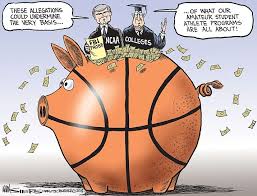
While quite controversial, the debate over the compensation of college athletes becomes quite rational when considering factors such as higher graduation rates, the limited supply of scholarships, and the profit margin of the NCAA. These players have done more than enough to earn them, and the NCAA has more than enough to give them. It is robbery to not pay these athletes for the service they provide and the money they bring in. College students are known for being financially low because they do not have careers yet and athletes especially, do not have the time for even part-time jobs. The rule forbidding college athletes from receiving payment is a regulation that needs severe revising, and will only become more obvious as time goes on.
Works Cited
Berkowitz, Steve. “NCAA reports revenues of more than $1 billion in 2017.” USA Today. 08 Mar. 2018. Gannett
Satellite Information Network. 07 Feb. 2019
Grenardo, David A. “The Duke Model: A PERFORMANCE-BASED SOLUTION FOR COMPENSATING
COLLEGE ATHLETES.” Brooklyn Law Review, vol. 83, no. 1, Fall 2017, pp. 157–214. EBSCOhost,
Jcoleman@ncaa.org. “Amateurism.” NCAA.org – The Official Site of the NCAA. 05 Apr. 2018. 07 Feb. 2019
<http://www.ncaa.org/student-athletes/future/amateurism>.
McCarthy, Michael. “The Zion Effect: Duke’s Zion Williamson ignites ticket sales.” Sporting News. 19 Feb. 2019.
Sporting News. 21 Feb. 2019
et-sales/1b5ouskbtvzr1nj29hjkjrlfz>.
Smith, Darron. “Emancipate the Black College Athlete.” Chronicle of Higher Education, vol. 60, no. 34, 9 May
2014, p. 5. EBSCOhost,
chaffey.idm.oclc.org/login?url=http://search.ebscohost.com/login.aspx?direct=true&db=a9h&AN=959218

