Reflection
Keeping the grading criteria in mind, reflect on the Rhetorical Analysis. What grade do you deserve and why?
Quick Write
What is a monster? Write your own definition of the word Monster.
Comment below.
Monster Culture (Seven Theses)
Our purpose for the first half of class is to understand the seven theses on Monsters and to develop a good resources that will help us to remember and use the theses in our writing.
Jeffrey Jerome Cohen – Monster Culture (Seven Theses) (p. 3-20)
We read Cohen’s Monster Culture: Seven Theses for today. Jeffrey Jerome Cohen argues that we can read “cultures from the monsters they engender” (3). This is chapter one of his book Monster Theory: Reading Culture.
From the editor/author’s website:
We live in a time of monsters. Monsters provide a key to understanding the culture that spawned them. So argue the essays in this wide-ranging and fascinating collection that asks the question, What happens when critical theorists take the study of monsters seriously as a means of examining our culture?
In viewing the monstrous body as a metaphor for the cultural body, the contributors to Monster Theory consider beasts, demons, freaks, and fiends as symbolic expressions of cultural unease that pervade a society and shape its collective behavior. Through a historical sampling of monsters, these essays argue that our fascination for the monstrous testifies to our continued desire to explore difference and prohibition. JeffreyJeromeCohen.com
Monster Theory
- Thesis I. The Monster’s Body Is a Cultural Body (4)
- Thesis II. The Monster Always Escapes (4)
- Thesis III. The Monster Is the Harbinger of Category Crisis (6)
- Thesis IV. The Monster Dwells at the Gates of Difference (7)
- Thesis V. The Monster Polices the Borders of the Possible (12)
- Thesis VI. Fear of the Monster Is Really a Kind of Desire (16)
- Thesis VII. The Monster Stands at the Threshold . . . of Becoming (20)
In groups, develop a list of the important points, lessons, takeaways, quotes, and examples that we need to know in order to understand the thesis. Write a short summary explaining the points of the thesis. Make sure you label which thesis you are writing about. This is very important because we will be using monster theory to write the last two essays in the course. The better we understand the theory, the better we will be able to apply it.
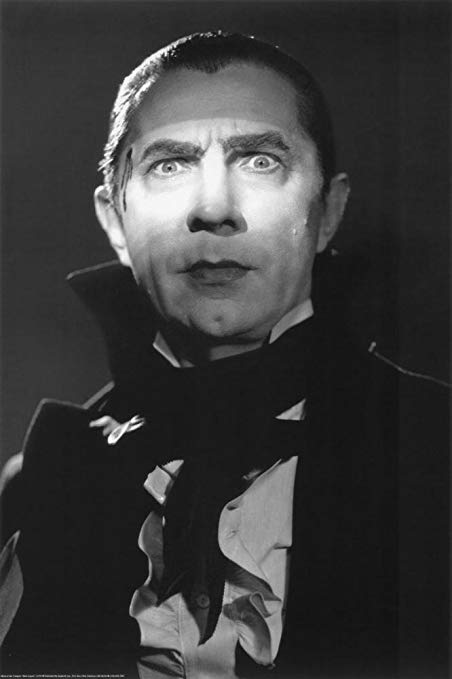
Vampires
What makes vampires monstrous?
Activity: Still-Life Writing
- List as many concrete details as you can see.
- List as many unique observations as you can.
- Write as descriptively as possible about the text.
- Use Adjectives – a word that describes, identifies or further defines a noun or a pronoun.
- Adverbs – Kindly, slowly, here, often, and very are examples of adverbs. Adverbs modify verbs, adjectives, or other adverbs.
- Descriptive language – appeals to the reader’s five senses: taste, touch, sight, smell, and hearing.
- Metaphors – a figure of speech that is used to make a comparison between two things that aren’t alike but do have something in common.
Use this strategy for your primary sources. Build on your concrete observation and evoke the image for your reader.
Dracula is the most famous vampire in literature and film.
Here is the latest film in Dracula’s long history. Dracula Untold (2014)
Finally, the last image to analyze.

mon·ster noun 1. an imaginary creature that is typically large, ugly, and frightening.
Evaluating Monsters Essay 3
For the third essay, you will be evaluating a monster across different media.
Using Quotes
One of the most important skills you can learn in academic writing is how to incorporate sources. To help remember this, we will use the metaphor of the quotation sandwich.

[Monsters] are disturbing hybrids whose externally incoherent bodies resist attempts to include them in any systematic structuration” (6).
Use this quote in the quote sandwich.
For Example: Cohen emphasizes that monsters “are disturbing hybrids whose externally incoherent bodies resist attempts to include them in any systematic structuration” (6). The hybrid aspect is important to understand because it means that monsters are not like us. They do not fit into a simple classification, rather, they are parts of two or more classifications, making them something that does not occur naturally.
Find a quote from Monster Culture (Seven Theses) to make a quote sandwich. This will be very helpful when you begin writing your draft.
Quick Write
Comment below with your quotation sandwich from class.


I believe I deserve a B+ grade because I properly analyzed ethos, logos, and pathos. I believe I put a lot of critical thought into my topic and that I was very clear in expressing my thoughts.
LikeLike
I definitely feel as if this essay was better than my last. For this essay actually, I wrote the wrong type of essay without knowing, therefore I had to rewrite the entire thing on a new topic. Because I had to start over, and I knew what I did wrong, I knew exactly what I would have to focus on when writing the new essay. I knew I would have to focus on the ethos, pathos, and logos, which I did not even address in the first attempt. This caused me to put extra emphasis on these items and focus mainly on them in my paragraphs. I even made sure to clarify each claim I made and connect what the video was trying to say, with examples from reality. I believe this essay is A- worthy.
LikeLike
I think I deserve an A- because I had a clear thesis and analyzed each scene in the commercial, but I could have gone more in-depth with my analysis. I spent more time describing the scene instead of fully analyzing it.
LikeLike
Reflection Rhetorical Analysis
I believe on the paper it would be a solid B. Describing in depth of what was represented in the analysis and what message was trying to be publish. Diving down to see what each frame was saying and connecting the story since it was moving quickly across the screen. One fault I can pull out would be the interpretation of Ethos Pathos and Logos, going into detail how these were implicated in the video to appeal to is respective traits.
LikeLike
Thesis 7: Sierra, Allison, Balynda
Why do we create monsters?
How do we perceive the world?
How do we perceive differences?
Monsters always return with more knowledge of our place in history and self-knowledge
“These monsters ask us how we perceive the world, and how we have misrepresented what we have attempted to place. They ask us to reevaluate our cultural assumptions about race, gender, sexuality, our perception of difference, our tolerance towards its expression. They ask us why we have created them.
Everyone is a monster to someone else based on perception
LikeLiked by 1 person
Monsters are a warning of the unknown. You’re awarded to leave the monster alone or be punished for being curious and going out to look. Some monsters police a cultural aspect to the unknown to strike fear into ignorant people. If you step outside the boarder you risk becoming part of the horde or to never be seen again. Personal leaders either continuously keep the people fearful or rise together and conquer.
LikeLike
1. The monster is always unable to be categorized based on human science, logic, and experiences.
2. Monsters can be labeled as more than one category and resist being labeled as only one. An example is the alien from the movie Alien, by Ridley Scott, in which it is classified as a crustacean, reptilian, humanoid, etc.
3. Since monsters cannot be categorized by humans, that makes them dangerous.
4. Monsters geographical locations cannot be categorized by humans and could be labeled as dangerous.
LikeLike
thesis 3
LikeLike
Thesis 6: Fear of the Monster Is Really a Kind of Desire
-We desire monsters because
-They are forbidden
-Jealous of their freedom
-Horror stories/ movies are tempory, safe, and predictable
“The monster is the abjected fragment that enables the formation of all kinds of identities-personal, national, cultural, economic, sexual, psychological, universal, particular (even if that “particular” identity is an embrace of the power/status/knowledge of abjection itself); as such it reveals their partiality, their contiguity” (Cohen 19).
-Overall this thesis addresses the desires one has for monsters.
LikeLike
Monster theory 1:
The main basis of Cohen’s first theory is that Monsters are the result of a culture’s experience “…of a time, a feeling, and a place.” The monster the culture creates usually pertains some type of warning of what could be from the experience they had. As cultures develop, so do the monsters change and sometimes new monsters are formed.
LikeLike
Thesis II: The Monster Always Escapes
the main idea of this thesis is that the monster is always reincarnated as a fragment of itself, representing events and abnormalities in the culture and/or society that creates it. Some important quotes are:
“its [the monster’s] threat is its propensity to shift.”
“Monsters must be examined within the intricate matrix of relations (social, cultural, and literary-historical) that generate them.”
“…each reappearance and its anaylists is still bound in a double act of construction and reconstitution. ‘Monster theory’ must therefore concern itself with strings of cultural moments, connected by a logic that always threatens to shift; invigorated by change and escape, by the impossibility of achieving what Susan Stewart calls the desired ‘fall or death, the stopping’.
LikeLike
IV:
“The Monster is difference made flesh”
-Monsters are symbolic of nonconformity and difference in a physical embodiment
-Society imposes a lack of humanity on individuals to make it easier to emphasize their monstrosity
-“Monster threatens to destroy… the cultural apparatus through which individuality is constituted and allowed
-Muslims in France/ Colored people “covered in sin”
“Political or ideological difference is as much a catalyst to monstrous representation”
-Richard III: portrayed as a monster based off his differing ideologies through physical characteristics of propaganda
LikeLike