
When you hear the term “environmentally friendly vehicles” what comes to mind? Majority of people would probably instantly think of “hybrid”, “electric” or maybe even “hydrogen”. Turbochargers may even be the new eco-friendly piece of technology and possibly surpass electric vehicles. Automakers agreed that by 2025, they will have vehicles that average 54.5mpg, this also includes SUV’s and work trucks. Hybrid vehicles may save gas, but lack in in the power needed. Turbochargers should be the go-to for fuel efficiency for automakers instead of pushing out these hybrid or electric vehicles in large masses. In this essay we will talk about how a turbo charger works and how it increases a car’s fuel economy. The differences in price between a base model vehicle and their turbocharged siblings.
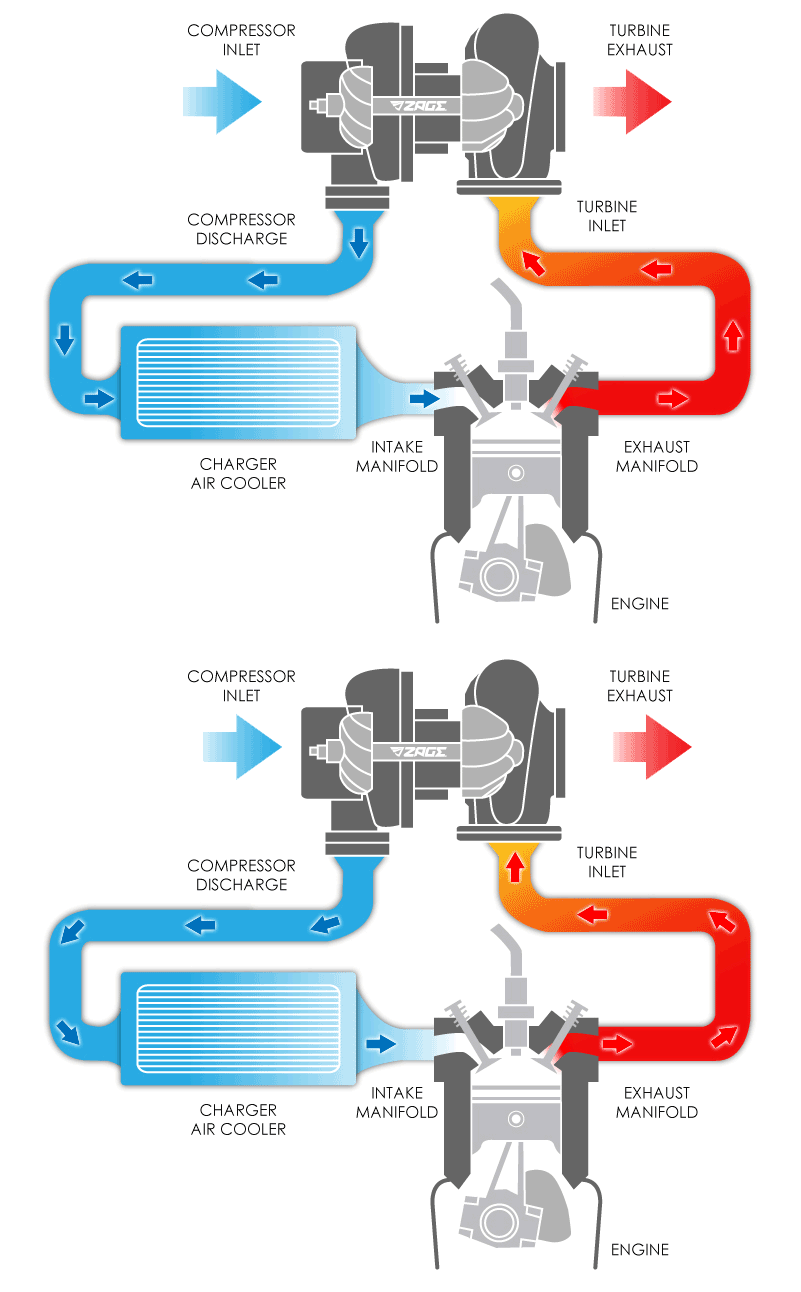
Turbochargers increase the fuel economy of a vehicle; this means a lot less of emissions being burnt into the atmosphere. In order to understand how this is done, I will give a brief explanation of how a turbo charger works. A turbocharger acts like a turbine, it brings in dense cold air from an intake and provides more air into the air-fuel ratio which causes more of a “bang” which causes more power, and the fuel burns a lot slower which helps save gas. Craig Balis, vice president of engineer at Honeywell Turbo, one of the biggest companies leading the market, said “The turbocharger is a green technology in the sense that it’s helping cut emissions and increase fuel economy. It’s a critical component to get more fuel efficiency out of the engine.”(Turbo Charging the Environment). For example, the 2012 Ford Explorer turbocharged gets about 23 miles per gallon as opposed to the regular base model which gets 20 miles per gallon according to Ford. It’s only a 3-mile difference but it adds up at the end of the week when you fuel up again. 23 miles per gallon, is a 15% increase in fuel efficiency from the 20 miles per gallon.
Turbocharged vehicles are a little bit pricier than the base model vehicles. Let’s look at the 2018 Nissan Sentra SV model, the price on this car is $19,085. The turbo charged version costs $22,200 which is about $3,000 of a difference. Which seems like a lot, but a full-on electric vehicle or hybrid would cost a lot more. Let’s take the 2018 Chevrolet Volt for example is a hybrid vehicle that runs 53 miles on pure battery power, and the rest on a combination of electric and gas for 367 miles. This hybrid vehicle starts off at $33,220, a whole $11,020 more than what the turbocharged Sentra costs. Yes, the hybrid may save more gas than the turbocharged vehicle, but many consumers may not be able to pay the extra money upfront so a turbocharged car may be a good choice to both save gas, and also save some money in the process.
While hybrids indeed are eco-friendlier due to less pollution being pushed out into the environment as opposed to a regular gasoline vehicle, hybrids also harm the environment just by manufacturing them.” According to an in-depth study by the U.S. Department of Energy’s Argonne National Laboratory, hybrid cars do, in fact, require more energy to produce than conventional cars, emitting more greenhouse gases and burning more fossil fuels during the manufacturing process. The production of hybrid batteries, in particular, requires much more energy than producing a standard car battery and results in higher emission levels of gases like sulfur oxide.”. (Does Hybrid Car Production Waste Offset Hybrid Benefits?). The so called “Eco-friendly” vehicles still harm the environment and many people do not know this due to it not being announced to the public. With a turbocharged vehicle, you already know it’s not the solution to the pollution crisis the earth is facing, but it is indeed more eco-friendly than the normal gas vehicle. Might as well, go green and save money instead of paying a lot for a vehicle that is “100% eco-friendly”.
While many may argue that a turbocharged vehicle may have more maintenance than a regular gasoline vehicle. Unless you are using the car’s turbo and engine for power, and aren’t abusing the turbo, it will last a lot longer than the same turbo that is being used for power on a different vehicle. Just like any other part on a vehicle there will be wear and tear so eventually the turbo will need to be replaced. Also, the money you initially save from both buying the car, and saving gas money, can be put towards the maintenance of the turbo if needed.
In conclusion, turbochargers may be a cheaper way to go green as oppose to a hybrid vehicle and not sacrificing the power that hybrids lack in. I suggest consumers to look at what benefits a turbo can add and how much it would be to add it on to their vehicle if they are not looking for a new car. If you are interested in saving some gas money but cannot afford the very expensive hybrids, a turbocharger could be a great choice to those on a budget and want to go green.
Citations:
Dave Roos, “Does Hybrid Car Production Waste Offset Hybrid Benefits”
Mark Halper “Turbocharging the environment” September 19th, 2011

