Intro to Course
Welcome to English 1B, Advanced Composition and Critical Thinking.
From the name, we can tell that this course focuses on two things. One, more advanced writing techniques, building on what you have learned in English 1A. Two, Critical Thinking. This is just an introduction to Critical Thinking, since this is a lifelong pursuit.
We split the course up into to Units, Critical Media Engagement and Critical Monster Theory. The first half of the course will be an introduction to critical thinking and practicing those concepts by applying them to media.
The second half of the semester will be learning theory, Monster Theory, and using it to analyze and understand our culture. We will learn critical thinking, reading, and writing and then we will apply theory to the world around us.
Writing Approach
The way I like to approach the teaching of writing is through Genre. You may know genres from music and movies. Just like those, there are many different writing genres that we can use. We will be focusing on four genres for this course.
In the intro to critical thinking unit we will write:
- Proposal
- Rhetorical Analysis
For the monster theory we will write:
- Evaluation of a monster
- Causal Analysis of a monster
We will learn more about each genre as we are working on them.
All four of these genres are research based argumentative papers. They each ask you to do specific work. You will be graded on how well you write the genre, and the five criteria we come up with together. Every essay will require the same two categories:
- Critical Thinking
- Clarity of Writing
The third, fourth, and fifth categories for grading we will come up with together.
Ice Breaker
- Name
- Major
- One or two interesting facts about you
Quick Write
What is critical thinking? Write for two minutes.
Syllabus
Any questions on the syllabus?
What is Critical Thinking?
Quality of Thinking, Quality of Life
30 Days to Better Thinking and Better Living Through Critical Thinking
Critical thinking, in a rich sense of the term, is self-guided disciplined thought that attempts to reason at the highest level of quality in a fairminded way.
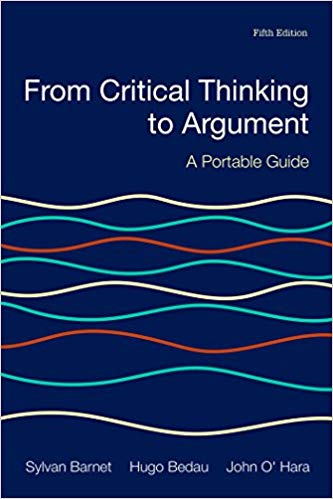
From our textbook.
Critical comes from the Greek word krinein, meaning “to separate, to choose”; above all, it implies conscious inquiry (4).
Conscious also means to be awake or aware. This suggests that by examining our reasoning, we can understand the basis of our judgments and decisions – ultimately, so that we can make better ones.
According to Google:
Critical Thinking – the objective analysis and evaluation of an issue in order to form a judgment.
Four Defining Traits of a Game
- Goal. The outcome that the players will work to achieve. It focuses attention and gives you a sense of purpose.
- Rules. Limitations on how to achieve the goal. It will unleash creativity and foster strategic thinking.
- Feedback System. Tells players how close they are to achieving their goal. Provides motivation to keep playing.
- Voluntary Participation. Requires that you knowingly accept the goal, rules, and the feedback. You have the freedom to enter and leave the game at will.
With these four ideas in mind, how can we apply this to college?

