By Christopher Negrete
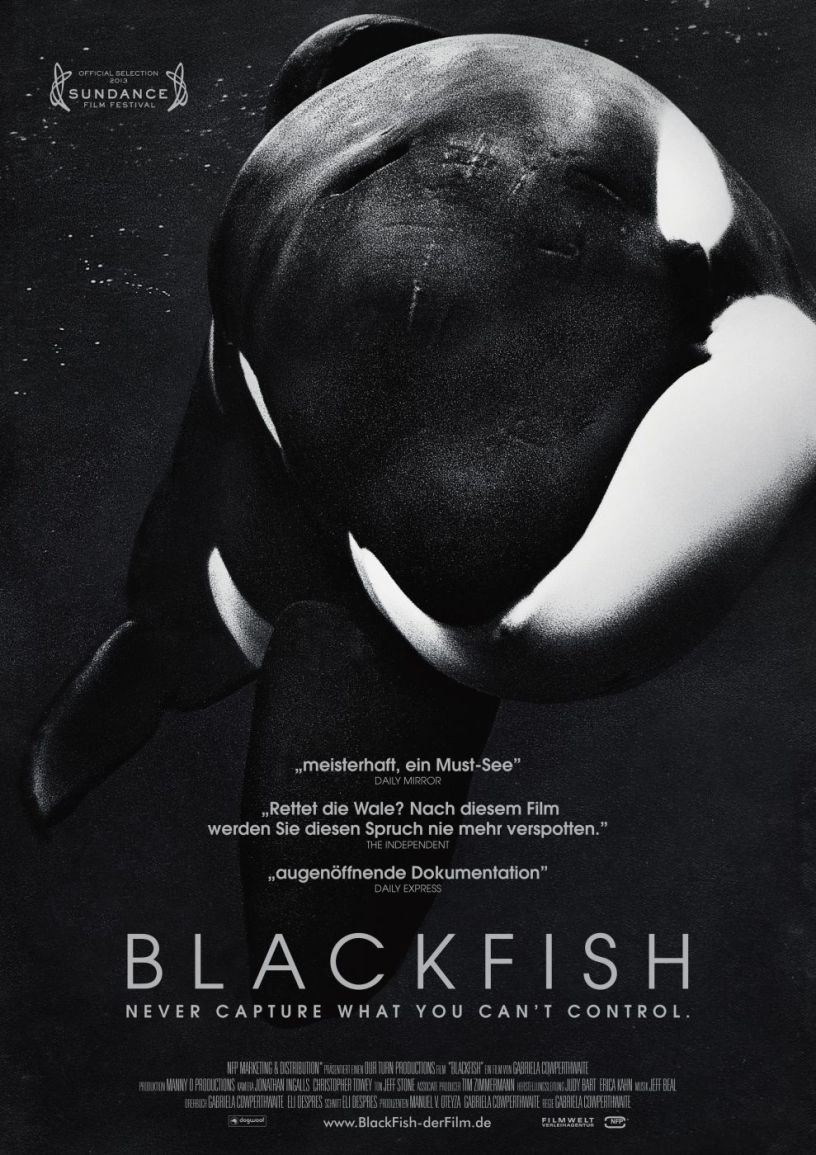
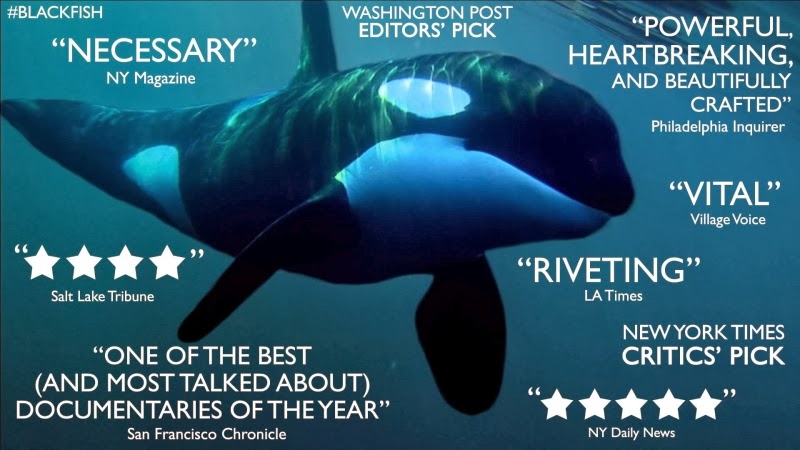
“I think that in 50 years, we’ll look back and go ‘My God, what a barbaric time’” is a quote stated by one of the trainers that is interviewed in the documentary Blackfish. In todays society where we are constantly seeking adoration for the new innovations we create; we tend to not care about the serious ramifications of our actions and how badly it will change the future. When looking at previous incidents with our conservation of nature it is all due to terrible past decisions because at the time, we did not think there would be serious consequences from our actions no matter how minor they may be. Apart of the issue is not being knowledgeable of the possibilities that arise when we commit certain actions; how can you know you are doing something bad if you don’t fully understand what your doing and in many cases such as in this documentary we are led to believe that we aren’t doing anything wrong because someone of higher authority deems it ok. Surely someone who is of higher authority must know what is right and wrong and any thoughts against it are just a result of you not knowing. In this documentary the director uses ethos, pathos, and logos to bring awareness to the audience of our actions that has led to the harm of these animals and make a call to action so that we can change how these animals have been treated and make things right.
The director starts the film by using a 911 recording of an incident that occurred at Sea World where a trainer has been attacked by an orca along side with intense music. This is used to grab the audience’s attention immediately because they want to know what happened that led to this attack and what happened to the trainer. By using the audience’s curiosity, they have effectively grabbed their attention into the documentary. The use of the intense music and audio from the call is an appeal to pathos and logos because it is not only evidence that this event occurred, but it sets the serious atmosphere of the movie making the audience concerned of what happened. Alongside the audio the documentary displays clips of the orcas in the water with the trainers making the audience believe they are witnessing the attack of the trainer appealing to pathos as this gives the audience a feeling of dread and concern wondering when the blood will fill the pool. The attack never occurs as the clip showed is actually from a show where the orca is lifting the trainer out of the water and shooting them into the air. This shows the audience how easily the trainers can be attacked at any moment as it seemed like they were getting hurt with the audio. This gives the audience a sense of relief but also a bit of discomfort worrying over the safety of the trainers. The purpose of this is to show the audience the aftermath of the actions Sea World has done that has led to the deaths and harm of various trainers and show the audience how serious these actions are.
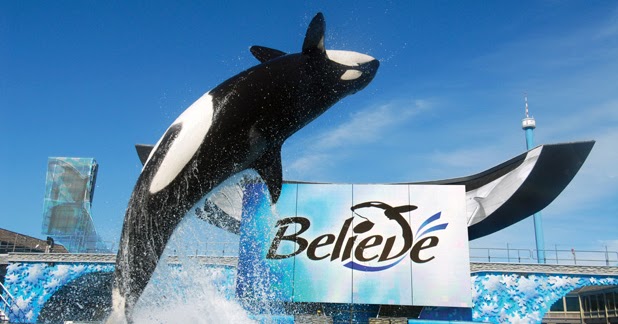
The director shows the title of the movie and then plays Sea Worlds advertisement where a boy is seeing orcas flying through the air beside the airplane that he is in. It is then followed by the question “Do you believe?” By showing this advertisement to the audience it shows that Sea World is marketing towards a younger audience, which doesn’t know a lot about these animals, in hopes that they attract customers similar to Disneyland by making the animals appear to be magical. This appeals to logos and pathos because the audience is shown an actual advertisement used by Sea World and they are hoping the audience will be disgusted or mad from this. The advertisement is then followed by the experiences of various Sea World trainers that experienced seeing these animals up close at a young age and how this led to them striving to become Sea World trainers. This appeals to logos and ethos because they are using evidence from people who actually worked at Sea World and experienced these things firsthand. An important thing that the film focuses on is where each of these trainers came from because it shows the reach that Sea World has in attracting peoples’ attention towards how interesting these animals are that they would eventually decide to go into a career involving these animals. They also use a personal experience one trainer had where he felt very emotional seeing one of the shows and how it inspired him to work with these animals. By using this the direction is able to show the audience how effective Sea World is in getting people to gain interest in these animals. That isn’t a negative, but the steps taken in nurturing these animals is what is wrong and how they eventually become focused in getting customers by appealing to a younger audience this is what the director is trying to get across to the audience.
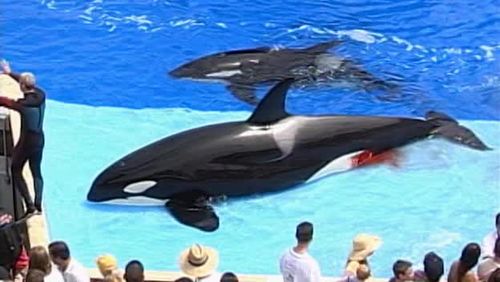
The film further expands on the claim that Sea World doesn’t take the proper steps in taking care of the animals by showing the process of becoming a trainer. The former trainers state how they thought that to become a trainer it would take years of education and training, but instead all that is required is a good personality and being a good swimmer. This appeals to ethos, pathos, and logos because the audience would feel shocked at this evidence which is supported by the accounts from former Sea World trainers. They show clips of the former trainers when they were working at Sea World and the emotion seen on their faces and their voices when they see one of their fellow trainers gives the audience an idea that this trainer died on the job, especially when they say, “She had so much experience, that it made me realize what happened to her really could have happened to anyone”. This gives the audience a feeling of remorse as the trainers and clips described her to be one the best trainers with an amazing personality which appeals to pathos. They use clips from a news interview which appeals to ethos and logos. Later in the film the treatment of the animals is described by the former trainers explaining how many of these animals are confined to small spaces with animals that aren’t familiar with each other which has resulted in the injury of their animals. The director shows a clip of a show where one of the orcas jumps out of the water and displays one of its cuts bleeding during a show. This invokes concern and anger in the audience because despite the animal getting injured they don’t do anything for the animal to protect it and still make it perform despite being injured.
Throughout the movie the director is trying to raise awareness of what has happened to these animals and the events following the actions of Sea World. An article states, “The documentary centers on the 2010 death of SeaWorld trainer Dawn Brancheau by an orca named Tilikum, as well as the practice of keeping such whales in captivity” (Gibson). As to whether the film was successful an article which has researched the change in Sea World found that there has been a drop in sales and attendance following the release of the film and also a change of how they handle the animals. The article states, “In 2014, a year of record tourism in the state of Florida, SeaWorld saw a drop of one million visitors to its theme park in Orlando. The decline followed Gabriela Cowperthwaite’s 2013 documentary film Blackfish, which presented the circumstances of orcas, or “killer whales,” held in captivity at parks like SeaWorld as cruel to the animals and dangerous to their trainers” (Schoen). It is also found that Sea World will no longer be breeding orcas and capturing anymore to be used in shows, so this is the last generation of orcas in captivity that will be used in performances. As stated in Schoen’s article, “In 2016, SeaWorld announced it will stop breeding orcas, and phase out its orca theatrical shows by 2019, a move widely attributed in the press to the impact of Cowperthwaite’s film”. In conclusion, the author appeals to ethos, pathos, and logos in this film to bring awareness of how these animals have been treated and ask for the audience to take action towards Sea World and places like it so that these animals are no longer mistreated.
Citation
Cowperthwaite, Gabriela, director. Blackfish. Blackfish Studio, 2013.
Gibson, Megan. “The Documentary Blackfish Is Still Creating Waves at SeaWorld.” Time.Com, Dec. 2013, p. 1. EBSCOhost, search.ebscohost.com/login.aspx?direct=true&db=a9h&AN=93323920&site=ehost-live.
Schoen, Steven W. “Blackfish-Ing for Buzz: The Rhetoric of the Real in Theme Parks and Documentary.” Journal of Florida Studies, vol. 1, no. 5, Jan. 2016, pp. 1–14. EBSCOhost, search.ebscohost.com/login.aspx?direct=true&db=a9h&AN=117368586&site=ehost-live.

