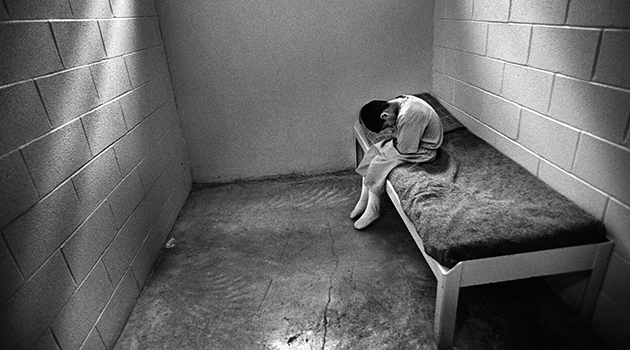

One afternoon in April 2010 in a small town in Indiana 2 boys Colt Lundy, 15 and Paul Gingerich, 12 shot and killed Colt’s step father. They shot him in the living room of Colt’s home. Hearing this story you might ask yourself, how could a 15 and 12 year old possibly do this? Colt Lundy’s step father Phil Danner was an alcoholic and was verbally and physically abusive to Colt and his mother. The last time Phil got drunk and roughed him up, Colt told his mother he was going to kill him. Colt’s mother doesn’t remember having that conversation. Colt also had easy access to weapons they had guns stashed all over his house. After the boys shot Phil they stole his car and ran way. They had planned to go to California. Colt convinced Paul if they killed Phil they could run away and start a new life in California. After the boys fled they were picked up only a few hours later at a Wal-mart, where they had stopped to get drinks. The boys were both sentenced as adults and given 25 years in prison. Paul who was only 12 years old was sentenced to a juvenile detention center. He is the youngest person in Indiana to be tried as an adult. Colt, who was 15, was sentenced to an adult maximum security prison. The prison houses over 2000 of the worst criminals in the state. According to officials Colt Lundy is a model inmate. He hasn’t gotten into any trouble. He earned his GED and is taking college courses. He also grows his hair long and donates it to cancer patients. He also spends time making quilts for the homeless. So does this child deserve to spend 25 years in prison? I strongly believe juveniles should not be tried as adults or sent to adult prisons.
There is no question the crime committed by Colt Lundy and Paul Gingerich was a horrible tragedy. And there is no question that they should be punished for their actions. But why should they be punished as adults when they were not adults when they committed the crimes? There have been many studies on the human brain and studies show that the brain doesn’t fully develop until age 25. What this means is yes, teens know right from wrong. But their brains, because they aren’t fully developed sometimes cannot think long term effects and consequences. Their brains also may not be capable of impulse control and decision making. According to Julianne T. Scarpino author of Journal of Law and Policy, “teens between the ages of 16-17 are more impulsive, aggressive, emotionally volatile, and reactive.” (pp. 849) She also states that “studies show juveniles are more receptive to rehabilitative intervention.” (pp. 850) Teens are also more likely to take risks, and vulnerable to peer pressure. Look at the story about Colt and Paul, Paul was only in the 6th grade. He was peer pressured by Colt and most likely didn’t realize what he had done until it was too late. Another thing we need to consider about these juveniles is their upbringing. Again, in the story of Colt his step father had been verbally and physically abusing him for years. And I understand there is a multitude of kids out there being abused and they aren’t killing people. Yes that is a fact, but we don’t understand what years of abuse can do to a child. Every child is different, and their brains are affected differently.
Teens that are sent to adult prison are more likely to be sexually, physically, and mentally abused by their inmates. How is this helping them? These kids need real mental help. Throwing them in prison with adult murders and rapists is only doing them more harm than good. In the juvenile detention centers the emphasis is on treatment and rehabilitation, which is not the case in adult prisons. Most studies show that putting juveniles in adult prison leads to more crime, violence, and higher prison costs. While in adult prison the juveniles learn from their only role models, the other inmates. This gives them a much higher rate of reoffending when they are released. According to an article from the Southern Poverty Law Center, “Research has shown that children in the adult criminal justice system are 34 percent more likely to be arrested again than those convicted of similar offenses in juvenile court. They also are 36 times more likely to commit suicide than youth in juvenile facilities.” www.splcenter.org/news/2014/10/30/children-tried-adults-face-danger-less-chance-rehabilitation* Despite all the studies showing the negative effects of trying juveniles as adults, we continue to do so.
Another question arises of who is an adult and who isn’t? If a 12 can be tried as an adult but a 20 year old cannot by cigarettes, where is the line between childhood and adulthood? Society tells us you can’t buy alcohol until 21 or serve your country until 18. Yet we can convict kids in middle school and send them to maximum security prisons. Are these kids getting lost in the system? Many of these juveniles do not have strong support systems. They don’t have family they can depend on. So their inmates become their friends and family. They join gangs in prison, and are much worse off than when they got there.
Every year there are so many juvenile crimes committed, however it is how we deal with these juveniles that is going to shape our future. We need to do what is best for these kids. We need to rehabilitate them and make them into functioning citizens of society. So how can we help? One thing we can start with is voting “yes” on prop 57. This proposition allows judges not prosecutors to decide whether a juvenile will be tried as an adult. This also means prosecutors will not be able to directly file charges in adult court without a judge’s ruling. These children deserve another chance. Studies have shown with proper treatment juveniles can be rehabilitated. Our children are the future and they deserve a fighting chance. We need to stop treating them like adults and treat them as what they merely are children.
Work Cited
“Children Tried As Adults Face Danger, Less Chance For Rehabilitation” SPLCenter, 30 October 2014, https://www.splcenter.org/news/2014/10/30/children-tried-adults-face-danger-less-chance-rehabilitation
King, Robert. “Colt Lundy: A Prison Of His Own Making” Indy Star, May 12 2014 http://www.indystar.com/story/news/2014/05/10/prison-making/8949971/
Scarpino, Julianne T. “A Progressive State Of Mind: New York’s Opportunity To Reclaim Justice For Its Juveniles.”Journal Of Law & Policy 23.2 (2015): 845-886. Academic Search Complete. Web. 10 Nov. 2016.
Images
Fig. 1 Prison Kids
Fig. 2 Kids in Prison
Featured Image Kid in Cell


Introduction: Very strong introduction. The story sets up a good claim for you to support.
Clearly defined claims: Good clear claims.
Claims supported: You introduce the support well and use it effectively
Organization: Well organized.
Properly cited sources: Sources are cited, not exact MLA.
Errors and typos: Minimal errors.
Comment: Very well argued and supported. Really great job.
LikeLike
auto liker, Status Auto Liker, Photo Auto Liker, auto like, autolike, ZFN Liker, Photo Liker, Status Liker, autoliker, Increase Likes, Autolike, Autolike International, Autoliker, Working Auto Liker, Auto Like, Autoliker, Auto Liker
LikeLike