
Logically Fallacious by Bo Bennett
Intro to Fallacies
Key Terms
- Argument: A conclusion together with the premises that support it.
- Premise: A reason offered as support for another claim.
- Conclusion: A claim that is supported by a premise.
- Valid: An argument whose premises genuinely support its conclusion.
- Unsound: An argument that has at least one false premise.
- Fallacy: An argument that relies upon faulty reasoning.
- Booby-trap: An argument that, while not a fallacy itself, might lead an inattentive reader to commit a fallacy.
The Internet Encyclopedia of Philosophy – Fallacies
This is a great resource for further reading on fallacies and how they are not so simple. The article lists 223 of the most common fallacies.
I do not expect you to know them all or to never use any. Fallacies are controversial. We appreciate logic and honesty in Western rhetorical thinking and that is at odds with many fallacies.
Fallacies are not wrong, they work very well and are very good at persuading people. Fallacies are considered unethical, and so we try to avoid them. They are thought of as flaws in thought, tricks, and sneaky uses of persuasion to convince others. Generally, we try to avoid the most common ones.
We looked at Ad Hominen and Hasty Generalizations last class.
Pathos or Emotional Appeals
Pathos represents an appeal to the emotions of the audience and elicits feelings that already reside in them.
Pathos speaking emotions overview
-
Select Emotional Themes and Points
-
Choose Words which Add Emotional Emphasis
-
Use Rich Analogies and Metaphors
-
Tell Stories
-
Use Humor
-
Connect through Visuals
-
Model the Emotion with Your Delivery Techniques
Appeals to pathos target the link between audience members and their values (Hauser, 2002).
When we act on our values, we experience emotions like happiness, pride, satisfaction, etc. When we do
not, we often feel shame, fear, or anger. The same goes for the actions of people around us: we are
often pleased when the actions of people around us align with our values and angry when they
don’t.
Emotional Fallacies (Pathos)
Scare Tactics – Scaring people and exaggerating dangers.

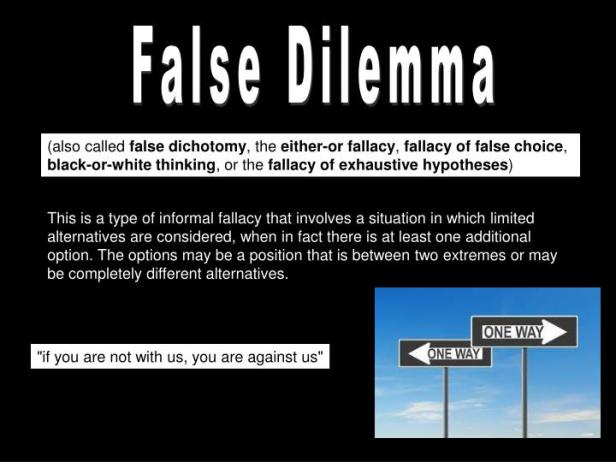
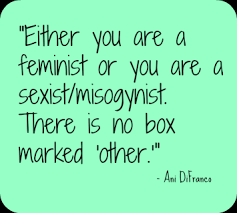
Either-or Choices / False Dichotomy – Oversimplification to only two choices.
Slippery Slope – Exaggerating the consequences of an action.
Sentimental Appeals – Excessive emotion intended to distract.
Bandwagon Appeals – Follow the path of everyone else.
Ethical Fallacies (Ethos)
False Authority – Offering yourself or other authorities as sufficient evidence.
Dogmatism – persuade by assuming a position based in biblical passages.

Moral Equivocation – suggesting that serious wrongdoings do not differ from minor ones.
Ad Hominem (At the person) – Attacks directed at character instead of the claims or argument.
Logical Fallacies (Logos)
Hasty Generalizations – conclusions drawn from insufficient evidence. Jumping to conclusions. The most common fallacy you will encounter.
Faulty Causality – assuming because one event happened after another, the first causes the second.
Begging the Question – a form of circular logic. an argument based on claims that cannot be accepted as true.
Equivocation – the use of ambiguous language to conceal the truth or to avoid committing oneself.
Non Sequitur – an argument in which claims, reasons, or warrants fail to connect logically.
The Straw Man – Misrepresenting an argument in order to knock it down. Arguing something that is not really there.
Faulty Analogy – An extended comparison that is inaccurate or inconsequential.
Red Herring – Partway through an argument, the arguer goes off on a tangent, raising a side issue that distracts the audience from what’s really at stake. Often, the arguer never returns to the original issue.
Which Fallacy(ies) is this?
Example: “Grading this exam on a curve would be the most fair thing to do. After all, classes go more smoothly when the students and the professor are getting along well.”
Let’s try our premise-conclusion outlining to see what’s wrong with this argument:
Premise: Classes go more smoothly when the students and the professor are getting along well.
Conclusion: Grading this exam on a curve would be the most fair thing to do.
When we lay it out this way, it’s pretty obvious that the arguer went off on a tangent—the fact that something helps people get along doesn’t necessarily make it more fair; fairness and justice sometimes require us to do things that cause conflict. But the audience may feel like the issue of teachers and students agreeing is important and be distracted from the fact that the arguer has not given any evidence as to why a curve would be fair.
Tip: Try laying your premises and conclusion out in an outline-like form. How many issues do you see being raised in your argument? Can you explain how each premise supports the conclusion?
Developing Solutions
- Summarize your problem into one sentence
- Describe why it is a problem (how does it violate your values, morals, or definition of
culture?) - Who is your audience (the person or group of people you are appealing to for help solving
the problem) - What are the values and interests of that specific audience (in a perfect world, what does
that audience care about? What makes them tick?) - How can you appeal to the audience’s values and interests when making your argument? In
other words, what is in it for your audience to agree with your position/argument?
Strategy Example
- Argument from Principle
- Argument from Consequence
- Argument from Precedent
Homework
- Read Part 7, Research and Sources
- Conduct Research
- Fill out research worksheet


The problem with Prop 57 is that many nonviolent criminals are being let out early which is causing crime rates to rise.
LikeLike
i have not yet decided what topic to write about.
LikeLike
1-A major problem today is Abortion!
2-Abortion is a problem because it condones minor and adult woman to have unprotected sex consistently! This violates the value of human nature and our reproduction. How can you kill or “abort” an innocent life, if you are against murder but are for abortion, you should truly reflect and self analyze on your morals.
3-All of us people, as human beings, Civilized , decent, good-natured human beings, should come together and fight against abortion.
4- We value life and how important, unique, and precious life truly is to us. We care about responsibility. Making a life takes responsibility, we should not allow anyone to just make and take a life as they please.
5-Wherever you are at in your life, would you have been okay with an individual deciding for you whether or not your life should be terminated? Before even having the chance or being able to speak/choose for yourself?!
By being prolife, you are pro for a lot of positive outcomes. You are pro for being against underage sex and prostitution and just as well, murder of a living organism!
LikeLike
*2- it is not that having sex is the issue, its that when being impregnated, woman are choosing to put an end to their unborn baby’s life rather than giving thought to other alternatives like adoption for example.
LikeLike
#5- exclude the last sentence…
LikeLike
1.)Social media is major Problem with todays adolescents
2.) People are not being mindful of what they post ( Whether if its their business, to put down others, to see what others are up to… Etc) knowing or not that colleges and jobs can easily look at that. What you post can follow you everywhere.
3.) I need twitter and and Instagram(the most used by adolescents) to use an age limit
4.) I would prefer if people would be mindful of what they post
5.) i would show people that what you post kind if shows what kind of person you are
LikeLike