
Alan E. Martin
Professor Ramos
English 1A
September 30, 2019
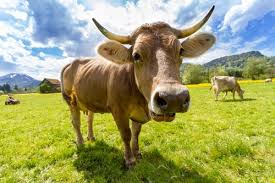
During the weekends or in special occasions we usually like to go out with friends and family to get something to eat. But what we don’t know is what we order may hurt our health and most importantly our home planet Earth. We may not think about how we are hurting Earth with what we’re eating in a daily basis because usually we start thinking about work, school, and family. And we forget where we live, and we get careless with what we do without thinking about it because of the busy life we have. We may be asking ourselves, how is the way we eat affecting our planet? This usually goes for the people who are carnivorous or Omnivorous (like me) who eat especially a lot of beef, don’t get me wrong I love eating beef and its especially hard to resist a hamburger, but we don’t realize what it does to our dear planet. We may not believe this but maintaining livestock for food causes deforestation and cows produce a lot of methane gas in which damages our earth’s atmosphere and earth itself. Cows aren’t to be blamed for, they are just cows being cows, what or more like who we should blame for is how the government has setup the process and us for eating a lot of beef. In fact, even though Australia is the country that consumes more meat than any country in the world, United States falls in second as the one of the largest meat consumers in the world (World Atlas).

First, we need to recognize what Methane is, Methane is a greenhouse gas like carbon dioxide (CO2). But the negative effect on the climate of Methane is 23 times higher than the effect of CO2 (LLS). Cows usually produce a lot of methane gas which later get trapped in our earth’s atmosphere and cause global warming. Usually a cow does on overage release between 70 and 120 kg of Methane per year (LLS). What causes these cows to produce Methane gases that hurt our world? Usually the cause of cows producing a lot of Methane gas is because of what farmers feed them. They are usually fed lush legume or sometimes they are fed with a mixture of corn and soy which usually causes them to bloat (Greenal). While they are bloat, they tend to produce more methane gas than usual. Instead farmers should let cows eat fresh pasture or hay because not only will this prevent less methane gas, it will also save them money by not having to pay the mixture of legumes and corn and soy. Another method could be limiting there grazing for a few hours a day, that way they get used to how much they eat (Greenal).
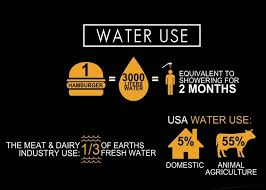
Secondly animal agriculture is responsible for water consumption in which ranges from 34-76 trillion gallons annually (Pimentel). Which means cows require a lot water to maintain and to grow their foods. But usually the problem is that the cows pollute the water that we use. “The FAO says grazing takes up 26 percent of the land on Earth that is not covered by ice — 30 percent if you count the land used to grow feed for the animals. And livestock does a lousy job of cleaning up after itself. Farm waste, washed downhill by rain, is a major source of water pollution. The methane and ammonia in cow dung rise into the air with evaporating water — and fall back down as ingredients of acid rain” (ABC). Also, ABC shared that the FAO stated that “major reductions in impact could be achieved at reasonable cost.” They also shared that it is cheaper to clean methane emissions from agriculture than in transportation. Some of these resolutions to these problems are the modification of a cows’ diet. Manure in which could be recycled; it’s already dried and burned as a fuel in many poorer countries — and because it comes from animals, it counts as “renewable” (ABC).
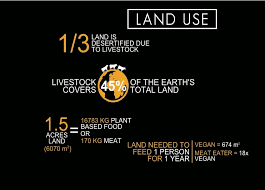
Another problem with animal agriculture is that it brings deforestation. As stated in the article “Animal Agriculture’s Impact on Climate Change” (AAICC) the livestock sector is also one of the leading drivers of global deforestation and is linked to 75 percent of historic deforestation in the Brazilian Amazon rainforest. Besides destroying the planet, it doesn’t benefit our health in the long run. Rainforests act as our oxygen tanks and when we’re cutting down rainforests, its like we’re cutting out or shutting down our oxygen tanks because rainforests make up 20 percent of the world’s oxygen. Rainforests also have the important responsibility of being an absorbing sponge that cleans all the carbon dioxide and the impurities that are in the air. That’s why if we continue to cut down the rainforests just for animal agriculture, we will be hurting not only ourselves but also our dear loved ones and the future generations to come.
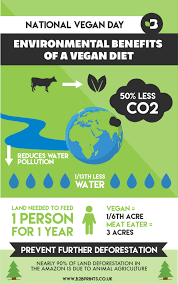
In conclusion animal agriculture is hurting our bodies health and Earth. We don’t have to be animal activists to start saving our planet, we can also help by making and changing eating habits. In the article “Climate Change–Cutting Your Foodprint” (CCCYF) states that skipping meat and cheese one day a week with your family, it would be the equivalent of taking your car off the road for five weeks – or reducing everyone’s daily showers by 3 minutes. Now imagine if the whole United States did this, it would be the equivalent of not driving 91 billion miles – or taking 7.6 million cars off the road. That would help the earth a lot but it would make a bigger impact if we were to turn towards a more vegetarian diet, don’t only take my word for it, the smartest man Albert Einstein also said it “Nothing will benefit health or increase chances of survival on earth as the evolution to a vegetarian diet.”(HC)
Works Cited
“Animal Agriculture’s Impact on Climate Change.” Climate Nexus, 23 Apr. 2019, https://climatenexus.org/climate-issues/food/animal-agricultures-impact-on-climate-change/.
“Climate Change–Cutting Your Foodprint.” Earth Day Network, https://www.earthday.org/take-action/cutting-your-foodprint/.
“Global Warming Culprits: Cars and … Cows.” ABC News, ABC News Network, 13 Dec. 2006, https://abcnews.go.com/Technology/GlobalWarming/story?id=2723201&page=1.
Greenall, Rob, et al. “Bloat Prevention in Pasture Fed Beef Cattle.” Agriculture, Department of Economic Development, Jobs, Transport and Resources, 17 Nov. 2017, http://agriculture.vic.gov.au/agriculture/pests-diseases-and-weeds/animal-diseases/beef-and-dairy-cows/bloat-prevention-in-pasture-fed-beef-cattle.
Happycow.net, https://www.happycow.net/vegtopics/famous/albert_einstein.
Pariona, Amber. “Top Meat Consuming Countries In The World.” WorldAtlas, 4 July 2016, https://www.worldatlas.com/articles/top-meat-consuming-countries-in-the-world.html.
Pimentel, et al. “Water Resources: Agricultural and Environmental Issues.” OUP Academic, Oxford University Press, 1 Oct. 2004, https://academic.oup.com/bioscience/article/54/10/909/230205.
Steinfield, Henning, et al. “Livestock’s Long Shadow, Environmental Issues and Option.” Time for Change, https://timeforchange.org/are-cows-cause-of-global-warming-meat-methane-CO2.

