
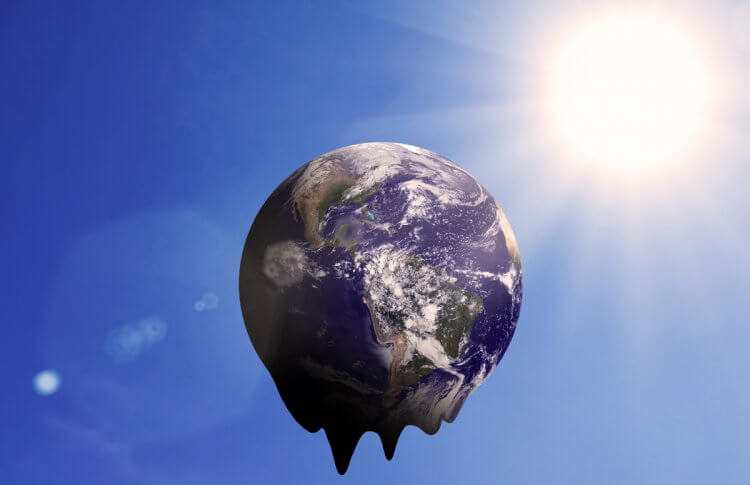
Is climate change something that we should all be worried about or is it something that will have no affect in our everyday lives. Climate change has been a big topic among younger generations (Greta Generation, as punsters were calling them, made climate change their number one issue) can we say that older generations don’t believe in climate change affecting their way of live. Climate change is a day and night fluctuations in temperature, atmosphere pressure, wind, and moisture in an area over an extended period. Almost all systems of life are connected to climate any changes could disturb related aspects. Plants and animals may adapt to changing climates but will not cope with rapid climate changes. Climate change will affect our environment, our way of agriculture, and our health, that could significant change the way of living for humans.
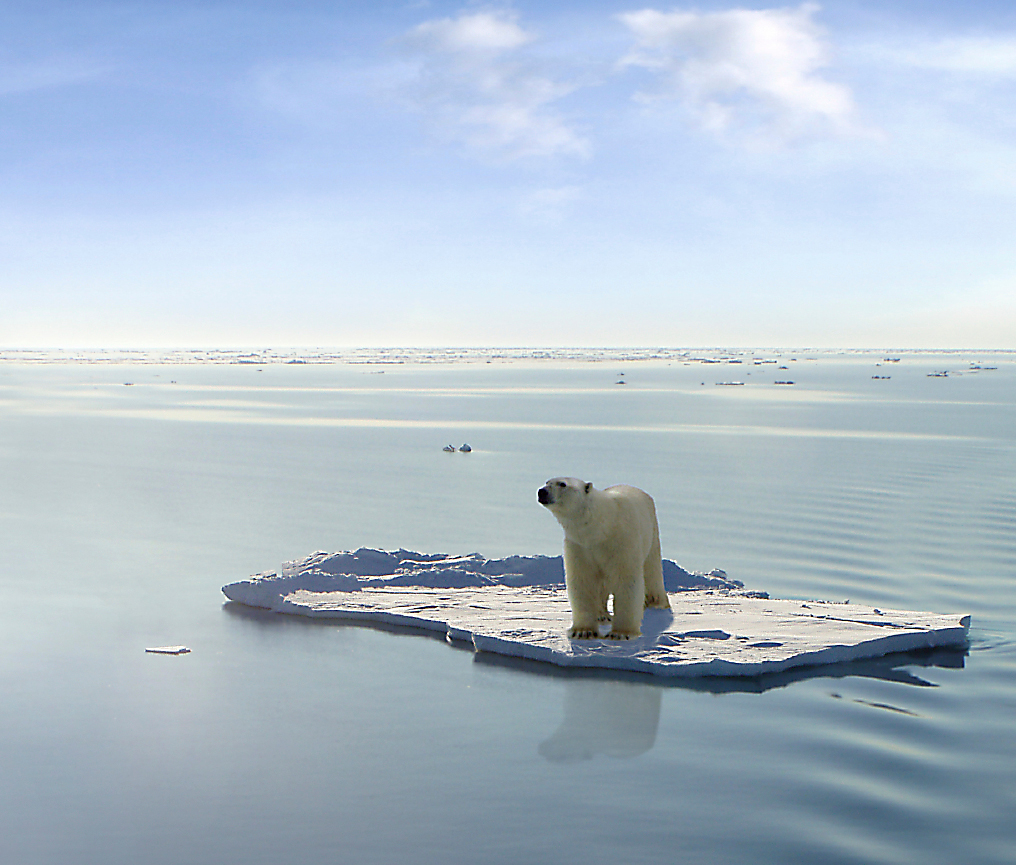
Climate change can affect the polar regions by melting the ice sheets and sea levels begin to rise, this also contributes toward dark ocean waters responsible to more sunlight absorption than ice. This makes the ocean to absorb more heat and give rise to heavier clouds. Weather at the both ends in the sense to heat and cold is going to be more extreme with every passing year. Oceans are now 40 percent more acidic then they used to be due to the amount of carbon dioxide that is increasing in the oceans. Increasing acidity could harm shellfish by weakening their shells, which are created by removing calcium from seawater. Acidification also threatens the structures of sensitive ecosystems which shellfish and marine life rely on. Aquatic animals’ lifecycles are controlled by temperature and this stress could lead to significant impacts. Even if the warming effects of ever-increasing carbon dioxide could be cancelled out, the effects on corals, shellfish, and eventually the entire marine food web would still be disastrous.
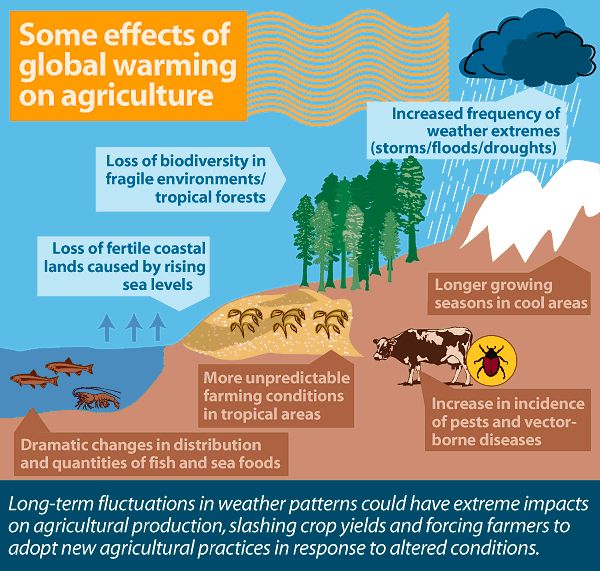
Agriculture is also in risk due to climate changes, shifting weather is serious issue which is much harder to tackle with. Unpredicted water supplies through rain fall adds to the farmer problem. Floods are actually out putting of global warming and climate change which put the agriculture produce to destructive level. Agriculture and fisheries are highly dependent on the climate, increases in temperature and carbon dioxide can increase some crop yields in some places. Changes in the frequency and severity of droughts and floods could pose challenges for farmers and ranchers and threaten food safety and quality. Water temperatures are likely to cause the habitat ranges of many fish and shellfish species to shift, which could disrupt our ecosystems. Overall, climate changes can make it really difficult to grow crops, raise animals, and catch fish in the same way we have done in the past. Crops are affected by higher temperature and extreme events, such as floods and droughts. Heat waves could directly affect livestock, heat stress over time can reduce fertility, reduce milk production, and make livestock vulnerable to disease. Changes in temperature can affect the timing of reproduction and migration, many fisheries already face multiple stresses, including overfishing and water pollution. These changes can significantly affect the quality of food and by that affect our health.
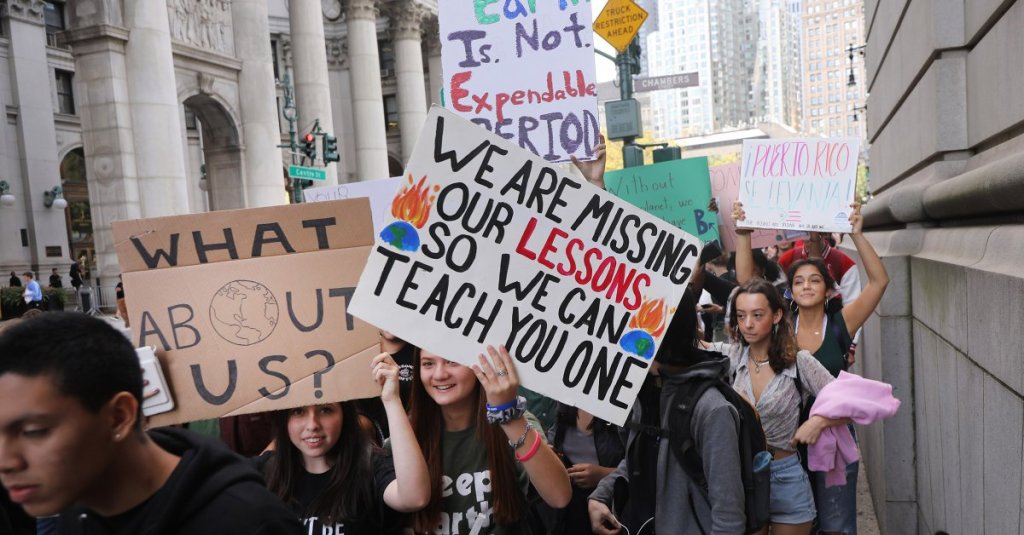
Climate related increases in sea surface temperature and sea level can lead to higher incidence of water borne infectious and toxin related illnesses, such as cholera and shellfish poisoning. Climatic factors influence the emergence and reemergence of infectious disease, in addition to multiple human, biological and ecological determinants. According to Patz, MD. “climatologist have identified upward trends in global temperatures and now estimate an unprecedented rise of 2.0 by the year 2100.” This is a concern because these changes in temperature can introduce many serious infectious diseases. Human susceptibility to infections might be further compounded by malnutrition due to climate stress on agriculture and potential alterations in the human immune system. Scientific studies indicate that extreme weather events such as hurricanes are likely to become more frequent due to human induced climate change. Hurricanes are responsible for a lot of destruction, such as hurricane Dorian which made landfall on September 1 in the Bahamas, which caused 56 dead and 600 people are still missing. It made widespread damage, leaving thousands without power and water. These hurricanes are getting stronger due to climate changes, the warmer the water temperatures is the more heat energy is available, and by this the higher the potential for tropical cyclones to develop. The affects of a hurricane are far more than just impacting our communities and our lives, its also a big part of affecting our ecosystems. Animals can be swept away or stranded, trees splintered, and coastal lands are swallowed up. According to Greta Thunbers an environmental activist, “over 200 species are going instinct every single day, the extinction rate is between 1,000 and 10,000 times higher than what seems normal”. Greta sailed to New York to speak to world leaders at the U.N. to make them understand that changes have to be done now, she stated to them “ people are deying, people are suffering, ecosystems are collapsing, we are in the beginnings of a mass extinction”, hoping that this would make them understand the severity of the problems that is happening with climate change. We have done some small changes throughout the years to become greener and by that help our environment. We have more electric cars in the roads and with that its creating less harmful air pollution, we are using renewable energy by installing solar panels in homes and schools, we are producing less waste by recycling more. Some states are banding the use of straws and plastic bags. The question that we should ask ourselves, are we doing enough to insure that are younger generation will not have to worry of climate change disasters or possible early extinction. More must be done in order to insure a better world for our younger generation. We must start educating people more on what climate change does, global warming is real, despite of what some political leaders will want you to believe. We have to educate people on the importance of recycling properly, we have to reduce CO2 emissions by eating less meat, “annually 14.5 percent of all emissions come from livestock” (McKibben). The movement has begun, we have young activist presenting these issues to world leaders, young people are protesting for their right to have a better world, they want to be heard, they want help. We need to start listening and start making changes in order to maintain our environment stable and provide hope for our those that are trying to fight for a better tomorrow.
Work Cited
McKibben, Bill. “How We Survived Climate Change. (Cover Story).” TIME Magazine, vol. 194, no. 11/12, Sept. 2019, pp. 14–21. EBSCOhost, search.ebscohost.com/login.aspx?direct=true&db=a9h&AN=138582349&site=ehost-live.
Morton, Oliver. “Climate Change: Is This What It Takes to Save the World?” Nature, vol. 447, no. 7141, May 2007, pp. 132–136. EBSCOhost, doi:10.1038/447132a.
Nerem, R. S., and J. Fasullo. “Observations of the Rate and Acceleration of Global Mean Sea Level Change.” Bulletin of the American Meteorological Society, vol. 100, no. 1, Jan. 2019, pp. S15–S18. EBSCOhost, doi:10.1175/BAMS-D-18-0247.1.
Patz, A M.D. “Global Climate Change and Emerging Infectious Disease”. January 2016 Article in Google Scholar (Jama Network)
Zamir, Shahid Ibni, et al. “Climate Change and Our Ecosystem.” Technology Times, vol. 7, no. 13, Mar. 2016, p. 2. EBSCOhost,
search.ebscohost.com/login.aspx?direct=true&db=a9h&AN=114258742&site=ehost-live.

