
Reflection
Reflect on the writing process for your first essay. Answer these questions:
- What did you do well in your essay?
- What are the strengths and weaknesses of your essay?
- Where did you struggle, if at all?

Intro to Rhetoric
Language is an art form. Here is the Wikipedia definition of Rhetoric.
Rhetoric is the art of discourse, wherein a writer or speaker strives to inform, persuade or motivate particular audiences in specific situations.
Aristotle’s definition of rhetoric
“The faculty of observing, in any given case, the available means of persuasion“

Ethos: Appeals to Ethics, Credibility or Character. Ethics, ethical, trustworthiness or reputation, style/tone. The credibility of the speaker persuades.
Pathos: Appeals to Emotion. Emotional or imaginative impact, stories, values. Uses emotional response to persuade an audience.
Logos: Appeals to logic. Persuade by reason and evidence.
Martin Luther King Jr. “I Have a Dream” Speech
What to look at for a Rhetorical Analysis
- Consider the topic.
- Consider the audiences of the text.
- Consider the author.
- Consider the medium and design.
- Examine the language.
- Consider the occasion.
Critical Reading Review
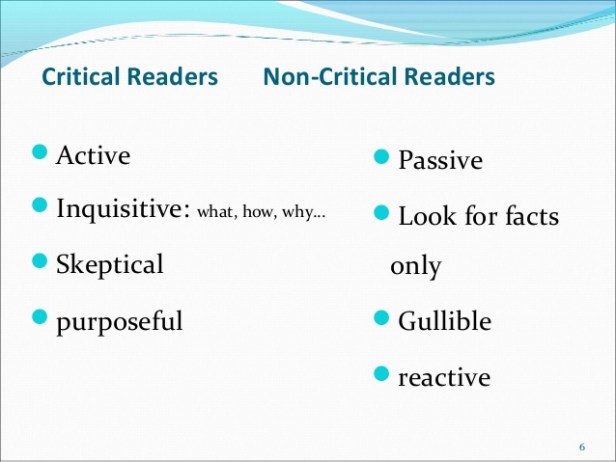
Reading with a Careful Eye
Underline, highlight, or annotate the text. Read for the main points, or important points. Do not highlight everything.
Read with a purpose. Read to understand, question, and analyze the text.
Define Terms and Concepts
Read carefully to how the terms and concepts are used in the argument. Define words and concepts.
Summarizing and Paraphrase
Summary: Say briefly what the whole adds up to.
Paraphrase: a word-by-word or phrase-by-phrase rewording of a text. A translation of the author’s language into your own.
Why summary and paraphrase?
- validate the basis of your argument.
- clarify the complex ideas contained in a text.
- support your argument
- lend authority to your voice
- help you build new ideas from existing ideas on the topic.
Strategies for Summarizing
Summarize paragraphs so you can follow the threads of the argument.
A summary can be a sentence, a paragraph, or a page long. Depends on how much room you have and how much you need to include.
Summary does not include your own thoughts.
Summaries can be for reading comprehension, but in essay writing the point is to assist your own argument.
Remember when writing a summary you are putting yourself into the author’s shoes.
Chapter 3: Critical Reading
DO NOT ASSUME you know what they are talking about. You need to put in the time to read, follow, and understand others arguments in order to become a critical thinker and writer.
Writing a summary of a reading or an argument helps us to make sure that we understood it correctly. I ask you to summarize in your weekly journals, because I am looking for how you are reading something, if you are reading it correctly and understanding it. It is very easy to miss read something.
Chapter 3, Critical Reading: Getting Deeper into Arguments takes us further into critical reading. It is much more in depth and thorough.
Persuasion is to convince someone else to accept or adopt your position, which can be accomplished in a number of ways (80).
Argument writing or critical writing focuses more on the logos, or appeal to reason.
- Logos: appeal to reason
- Pathos: appeal to emotions
- Ethos: appeal to credibility or trustworthiness
Argument represents only one form of persuasion, one that relies on the cognitive or intellectual capacity for reason (80).
An argument doesn’t require two speakers or writers with opposing positions. They may, but you can write an argument, using appeals to reason with out setting it up as a dispute.
Dispute is a special kind of argument in which two or more people express views that are at odds (81).
Reason v Rationalization
Reason: the power of the mind to think, understand, and form judgments by a process of logic.
We can reason through induction and deduction.
Deduction takes beliefs and assumptions and extracts their hidden consequences/conclusions (106).
For Example:
- Premise: Humans are mortal
- Premise: Socrates is human
- Conclusion: Socrates is mortal.
This statement is a syllogism. premise + premise = Conclusion
Sound Arguments
All premises must be true
The syllogism must be valid, premises support the conclusion.
Then, the argument is said to be sound.
Fallacies are kinds of invalid arguments.
Induction uses information about observed cases to reach a conclusion about unobserved cases.
For Example:
If we see the train arrive at six am, several days in a row, we can reason that it will arrive at six am tomorrow.
Unlike deduction, induction yields conclusions that go beyond the information contained in the premises used in their support.
Rationalize means to devise a self serving reason.
We can come up with reasons and justifications to make ourselves feel better, but that does not mean that we are using reason. This is where the struggle will always be.
We can’t be sure we are not rationalizing, but we can seek to think critically, examine our beliefs, scrutinize out assumptions, look for counter evidence, and think if it’s reasonably possible to draw different conclusions (92).
We need to have sufficient sample size in order to reason effectively.
Assumptions
Assumptions can be stated or unstated, explicit or implicit.
Implicit assumption is one that is not stated but, rather, is taken for granted.
An explicit assumption is one that is stated and given as evidence, also known as a premise.
Evidence
Evidence: facts or information indicating whether a belief or proposition is true or valid.
Different disciplines use different kinds of evidence. We can use a text, field research, or experiments as evidence.
Experimentation: science involves the systematic study of claims tested, designed to yield particular observations.
Examples: a previous sample used as evidence.
- Real events drawn from history.
- Artificial or hypothetical cases cannot be used for evidence but can be used for persuasion.
Analogies: a kind of comparison that asserts things that are alike in some ways are alike in others.
Authoritative Testimony: citation or quotation of authorities.
Statistics: numbers and data used to support claims.
- Graphs, Tables, Numbers
- Statistics can be misused and can be seen as misleading.
- Unreliable statistics, looks impressive but is insubstantial or irrelevant.
Nonrational Appeals
Satire: witty ridicule
Irony: contrasts what is said and what is meant
Sarcasm: the use of irony to mock or convey contempt.
Humor: being amusing or comical in writing or speech.
Emotional Appeals
In arguments we appeal to reason. Sometimes emotional appeals can be used effectively to aid the reason. Appeals to emotions can distract from the facts of the case, but they can also make the audience care about the evidence.
Are emotional appeals fallacious?
You should focus on the facts and offer reasons, but you may also provoke appropriate emotions in the readers. Be careful.
- Do not falsify
- Do not distract attention from the facts
- Do think ethically about how emotional appeals may affect the audience.
Does All Writing Contain Argument?
No, but most does. Most writing uses reason to get the reader to agree with what the writer is saying.
In college, you should be using reason and evidence to support what you are saying. There should be a clear purpose and reason to your writing, hence it should be an argument.
Sample Rhetorical Analyses
The Hypersexualization of Women in Media
Homework
- Locate a text for Analysis


I believe that I did very well in my essay. but it could always use more information to support the proposal. I think the strongest part in my essay was staying on topic an not deviating towards my own personal emotions. A weakness that I noticed in my essay was proper citations for the images used. One thing that I struggled with was making the bibliography because I have not written one before.
LikeLike
i believe my thesis was well organized so it made it easier to make my arguement.
Strengths writing and contents. weakness was header, punctautions and citations.
Not much struggle. i was interested in the topic.
LikeLike
For my essay I spoke about suicide. In my essay I feel I did well on sharing research from the scholarly websites. The information I had was the most recent and affective. I also shared a personal story on how it affected me and from that it changed my perspective on the issue and allowed me to be open about how to fix the problem. A strength I had would be sharing my story it was detailed yet to the point and I did not allow it to affect my writing and researching. One of my weaknesses would probably have to be the annotated bibliography. It was a weakness because I felt as though I was sounding repetitive and it did not make sense after a while. I struggled the most with the annotated bib and also after reviewing it with a tutor, they shared with me that I needed to read my essay aloud and check for grammar because I had a few issues.
LikeLike
1. I did well with incorporating a personal anecdote and tying my essay in with my own personal experience, therefore making it seem to the reader as though they have a glimpse of what I am talking about.
2. I believe the strengths of my essay were thoroughly explaining my quotes and giving my own personal intake/experience with my topic. A weakness of mine was definitely finding good quotes to further support my essay. I struggled with that for some reason.
3. I honestly struggled with the structure of my essay. Meaning, at first I honestly did not know how to piece everything and tie it together. Connecting ideas and making them flow was a struggle of mine.
LikeLike
What I did well on my essay was finding a topic and a source as well as finding what I wanted my purpose for it to be. Procon.org truly helped with finding a topic. My strength was getting the requirements done as how many words and finding pictures, however my weakness has to be how I structured my essay as I worry it doesn’t make 100% sense. I struggled the most with outlining how to write each point and whether I backed it up with sufficient data.
LikeLike
What I feel I did well on my essay was connecting the research information and my own words together. My strengths of my essay was using the information of my research to explain my problem and solution clearly. My weakness of my essay might have been the flow of which I switched from paragraph to paragraph and tried and connect the two. What I struggled most was on how to structure my essay overall and make sure I put the right information in the right spot.
LikeLike
I don’t believe I did anything well on my essay, I felt I was on autopilot. I believe the research was lacking, was not as strong as I was aiming for. It felt as if I could have provided more research, once I was speaking about a topic I knew I could find more research to support my argument. Due to the time I began to write I felt as if there was not enough time to place the research. If I had to say I had a strength, I would possibly the structure on the essay. A weakness I faced was possibly the strength of my arguments. I struggled at putting my ideas onto the sheet as well as coming up with a proposal. Most of time was spent trying to find a topic which I felt passionate about.
LikeLike
In my own opinion I think I did really well in my introduction. I feel as if I had a really strong and clear thesis and explained what the problem was really well. The strengths of my essay was my thesis and I also feel that I had really strong points. The weaknesses of my essay were the sources I used I feel as if I could’ve found better sources, that is one key thing I want to focus on the next essay. I struggled the most trying to come up with a good and strong solution. My overall essay would have been better if I had put more thought into a solution and had a better conclusion.
LikeLike
In my essay I expressed the injustice of mass incarceration and how its been a raising problem in the United States over the last 40 years.my strengths this essay was using great sources that included statistics of this problem to support my reasoning why we need to put an end to mass incarceration. A weakness in this topic for me was that this issue is very complex when it came to solutions. Their is to many crimes to come to a perfect solution to given the laws and different judges across the states.
LikeLike
I feel like I did well in introducing my problem to the audience. I had a specific target to whom I wanted to voice my concern to.
I believe the strengths in my essay where that I had evidence that supported my problem. For example, I took samples from interviews where the subject was adolescent girls. This gave proof of how young girls responded to specific weight loss advertisements.
I struggled getting a topic for this essay. It started as one problem, but as I began to do more research I ran into other problems and my essay topic kept changing. I was a bit indecisive on where this paper was going. Also, my solution was straight forward. In the beginning I struggled incorporating the solution into my whole essay as opposed to leaving it for the end of the essay.
LikeLike
1. In my essay I think I was successful with coming up with 3 ‘strong’ problems and solutions on how to try to avoid this problems. I also really liked my conclusion because I tried to make it sound strong, so the readers can agree with me.
2. Strengths: I think the only strengths in my essay were that my topic is very relevant and the three problems I chose are very common ones from social media. Maybe I needed to make my arguments a little more powerful and put more sources to further support my claims.
3. I struggled in trying to word my essay ‘right'( by trying to make sure it made sense). I also struggled in trying not to sound too redundant in my paragraphs. I also struggled with trying to find some sources because I ran into some papers that were similar, or very limited available information.
LikeLike
In my essay, I believe I was quite convincing that the solution I proposed would be rather effective and gave enough evidence to support my claims. I feel that my reasoning for the solution I chose was the strength of my essay and the weakness was the overuse of sources and the repetitiveness. I surprisingly struggled quite a bit writing this essay as I found it difficult to write 1000 words on just the solution I proposed, along with doing the essay last minute. I feel I should have chose a topic I was more informed of and familiar with, however, I realized that too late. Overall, I believe my essay is decently written however it could use a bit of work and less repetitiveness.
LikeLike
1) The research, I am not completely satisfy with my essay.
2) The research is something that I enjoy but its hard to put everything in order.
3) I struggle in a lot of different areas in my essay but annotated was difficult for me to do. I need to practice that a lot more.
LikeLike
What I did well on my essay is to address the problem concerning college students having bad mental health due to college. In addition did well on structuring the essay at greatest solution to the worse as well as to support them with evidence.
The strengths of my essays are the solutions and the evidence to support them. my weakness is my conclusion as I feel that I rushed it and should have taken time.
I didn’t really struggle as I knew what I was doing and what solutions there were.
LikeLike
I did well on choosing the topic as well as completing the format it was supposed to be in. My strengths would be in introducing the topic in the beginning of my essay and letting the reader know what I’m going to talk about. My weaknesses of my essay is not being to form a transition in between the paragraphs. I was struggling a little bit on how to explain more detail on the quote I stated.
LikeLike
One thing i did well on my essay was explaining the causes and effects of water pollution. One of my strengths in this essay were using good sources to backup the problem and solution. My weakness was struggling to find a good solution simply because have trouble putting my thoughts into writing. I struggled with the structure and punctuation since i tend to use a lot of run on sentences.
LikeLike
What I do well in my essay I think I was because I talking about my personal life and was fluent the witness in my essay I was the dialogo
LikeLike